


 Web
Web










Unlock Financial Privacy: Your Guide to Buying EOS Without ID Verification
 Alexey Morozov
|
Alexey Morozov
|
Jun 22, 2026

Purchase EOS (EOS) with Bangladeshi Taka (BDT) easily at Switchere and benefit from fast, secure transactions.
EOS (EOS) is a third-generation blockchain platform engineered using the EOSIO open-source software, designed to support the development, hosting, and execution of decentralized applications (dApps) at scale. It aims to solve the scalability and usability challenges prevalent in earlier blockchain technology by offering high transaction throughput and a flexible governance model. The core of its architecture revolves around a Delegated Proof-of-Stake (DPoS) consensus mechanism, where token holders vote for Block Producers (BPs) responsible for validating transactions and maintaining the decentralized network. This system is designed to enable faster block times and significantly higher transactions per second compared to many proof-of-work networks.
A key distinguishing feature of EOS is its resource-based model, where holding and staking EOS tokens grants users and developers proportional access to network resources like CPU (computation) and NET (bandwidth), rather than requiring per-transaction gas fees. RAM, another critical resource for storing on-chain data, is traded on an open market. EOS supports smart contracts written in C++ and compiled to WebAssembly (WASM), providing a robust environment for complex dApp development. The EOS digital asset serves multiple functions: it's a utility token for accessing network resources, facilitates on-chain governance through voting for BPs and protocol amendments, and acts as a medium of exchange within its ecosystem.
EOS positions itself as a foundational Web3 infrastructure, striving to provide a developer-friendly and enterprise-grade platform. While facing a competitive landscape, its emphasis on scalability, a feeless-like user experience through resource staking, and its established smart contract capabilities allow it to support diverse DeFi applications, gaming platforms, and other on-chain solutions. The ongoing development of the EOSIO software and community-led initiatives continue to shape its role within the broader digital ledger space, focusing on enhancing performance and interoperability.

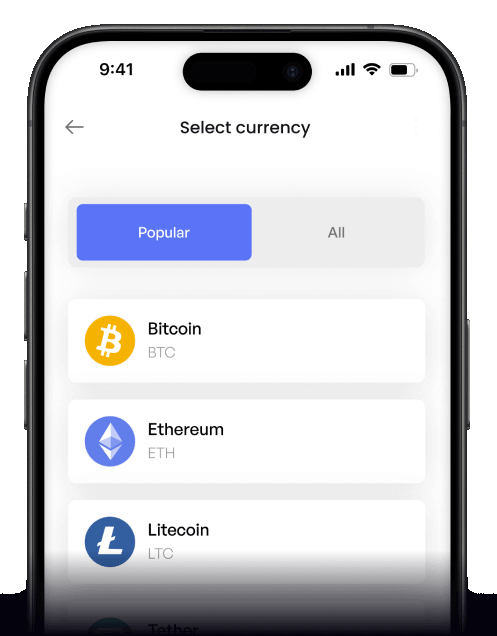
 Step-by-step guidance
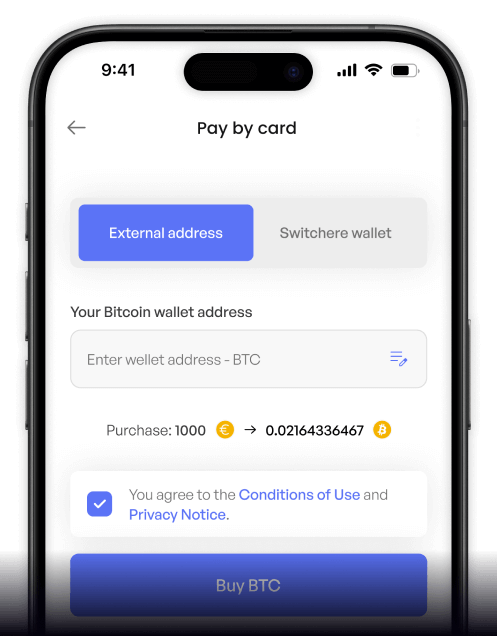
 Easy credit card payments
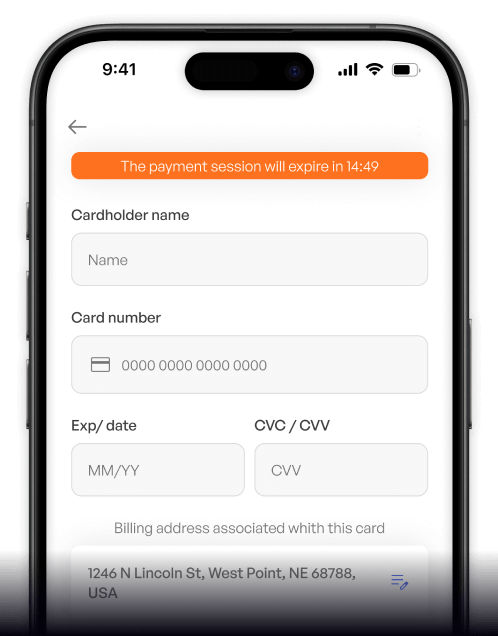
 Streamlined purchase process
Alexey Morozov
|
Streamlined purchase process
Alexey Morozov
|
Buy crypto with your credit card from anywhere. Live rates, transparent fees, and 3D Secure on every order - the full Switchere card-buy experience in your pocket.



Scan to download the app iOS and Android

Our website uses cookies. Our Cookie Policy
