


 Web
Web






Comparing XRP vs Solana: Performance, Use Cases & Future
 Oliver Grant
|
Oliver Grant
|
Aug 19, 2026

Purchase Solana (SOL) with Egyptian pound (EGP) easily at Switchere and benefit from fast, secure transactions.
Solana (SOL) is a high-performance Layer 1 blockchain platform engineered for speed, scalability, and low transaction costs, designed to support the development of decentralized applications (dApps) requiring high throughput. Its core innovation lies in its unique consensus mechanism, a hybrid model combining Proof-of-Stake (PoS) with a novel system called Proof-of-History (PoH). PoH creates a verifiable chronological record of events, enabling faster transaction ordering and processing before they are bundled into blocks by PoS validators. This architecture, alongside features like Sealevel for parallel smart contract execution, Tower BFT for optimized consensus, Turbine for block propagation, and Gulf Stream for mempool-less transaction forwarding, allows Solana to achieve exceptionally high transactions per second (TPS) and sub-second finality.
The native utility token, SOL, is integral to the Solana decentralized network. It is used to pay for transaction fees and smart contract interactions on the blockchain technology. SOL holders can also participate in network security by staking their tokens directly with validators or through liquid staking protocols, earning staking rewards in return. While governance mechanisms are evolving, SOL may play a role in future on-chain governance. Solana has rapidly emerged as a significant player in the Web3 infrastructure, particularly favored for DeFi applications, NFT marketplaces, and Web3 gaming projects that demand its distinctive low latency and cost-efficient digital asset management capabilities, positioning it as a key platform for scalable on-chain operations.
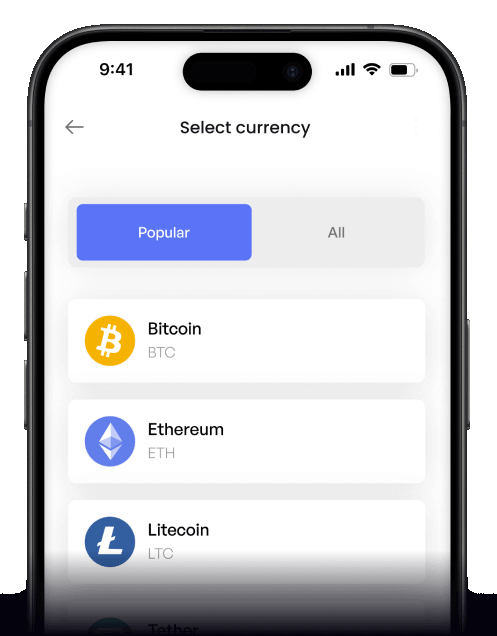
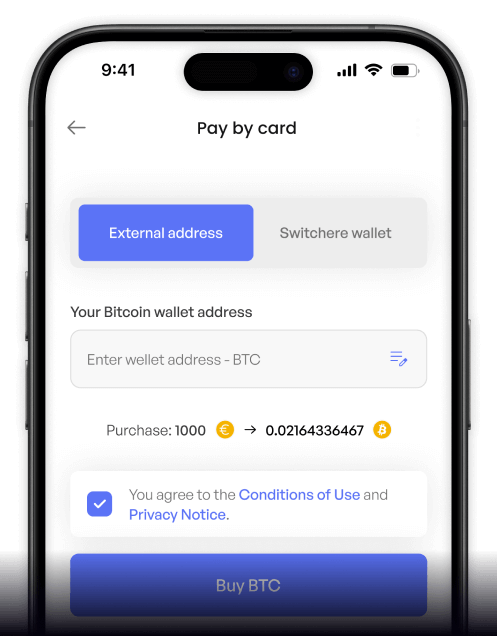
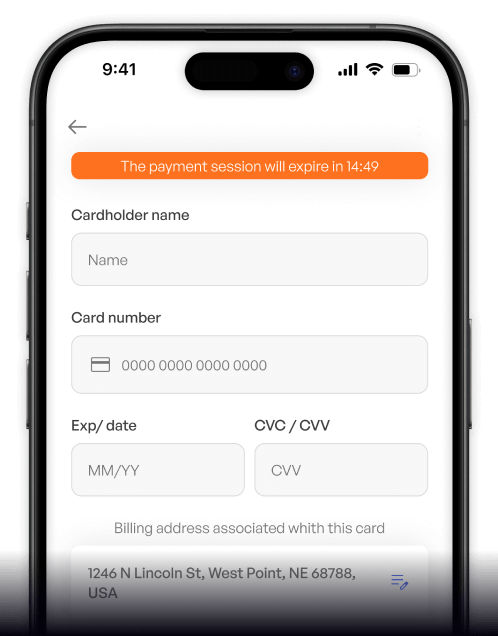
 Step-by-step guidance
 Easy credit card payments
 Streamlined purchase process
Oliver Grant
|
Streamlined purchase process
Oliver Grant
|
 Roman Klochko
|
Roman Klochko
|
Roman Klochko
|
Roman Klochko
|
Buy crypto with your credit card from anywhere. Live rates, transparent fees, and 3D Secure on every order - the full Switchere card-buy experience in your pocket.



Scan to download the app iOS and Android

Our website uses cookies. Our Cookie Policy
