


Peruvian Sol (PEN) to Crypto
Instantly convert Peruvian Sol (PEN) to a wide range of cryptocurrencies at real-time exchange rates. Our platform ensures secure transactions, and we continuously expand the list of supported tokens to meet the growing needs of our users.
Popular Coins for Peruvian Sol (PEN)





Other Coins for Peruvian Sol (PEN)
 PEN
PEN

1INCH
 PEN
PEN
AAVE
 PEN
PEN
ACH
 PEN
PEN
ANKR
 PEN
PEN
APE
 PEN
PEN
ARB
 PEN
PEN
AUDIO
 PEN
PEN
AVAXAVAC
 PEN
PEN
AVAX
 PEN
PEN
AXS
 PEN
PEN
BAT
 PEN
PEN
BNBBSC
 PEN
PEN
CELR
 PEN
PEN
CELO
 PEN
PEN
LINK
 PEN
PEN
CHZ
 PEN
PEN
COMP
 PEN
PEN
CVX
 PEN
PEN
CRV
 PEN
PEN
DAI
 PEN
PEN
DYDX
 PEN
PEN
XEC
 PEN
PEN
ETC
 PEN
PEN
ENS
 PEN
PEN
FET
 PEN
PEN
GNO
 PEN
PEN
GRAM
 PEN
PEN
HOT
 PEN
PEN
ILV
 PEN
PEN
IMX
 PEN
PEN
JASMY
 PEN
PEN
KNC
 PEN
PEN
LDO
 PEN
PEN
LPT
 PEN
PEN
MASK
 PEN
PEN
NEXO
 PEN
PEN
NMR
 PEN
PEN
ONT
 PEN
PEN
OP
 PEN
PEN
CAKE
 PEN
PEN
DOT
 PEN
PEN
MATIC
 PEN
PEN
QNT
 PEN
PEN
RPL
 PEN
PEN
SHIB
 PEN
PEN
SKL
 PEN
PEN
STG
 PEN
PEN
XLM
 PEN
PEN
STORJ
 PEN
PEN
SUSHI
 PEN
PEN
USDTTRC20
 PEN
PEN
USDTSOL
 PEN
PEN
USDT20
 PEN
PEN
USDTBEP20
 PEN
PEN
USDTPOL
 PEN
PEN
USDTTON
 PEN
PEN
USDTXTZ
 PEN
PEN
USDTAVAC
 PEN
PEN
USDTNEAR
 PEN
PEN
USDTOMNI
 PEN
PEN
XTZ
 PEN
PEN
SAND
 PEN
PEN
TWT
 PEN
PEN
UNI
 PEN
PEN
USDCAVAC
 PEN
PEN
USDCOP
 PEN
PEN
USDCBSC
 PEN
PEN
USDCTRC20
 PEN
PEN
USDCBEP20
 PEN
PEN
USDCPOL
 PEN
PEN
USDCARB
 PEN
PEN
USDCSOL
 PEN
PEN
USDC
 PEN
PEN
WOO
 PEN
PEN
YFI
 PEN
PEN
ZIL
How to buy crypto with credit
card on Switchere
 Step-by-step guidance
 Easy credit card payments
 Streamlined purchase process
-
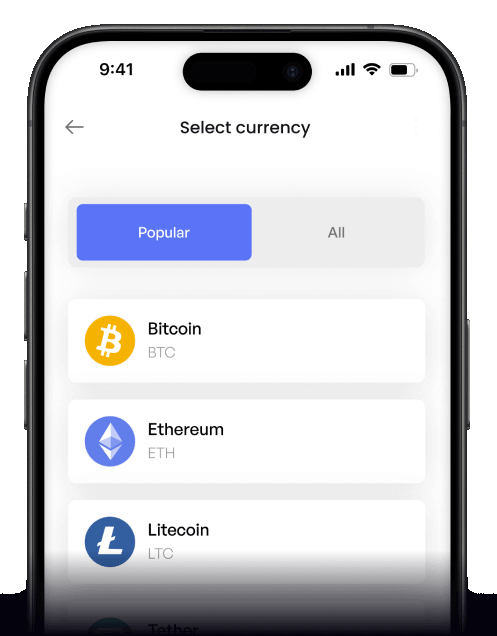 01
01Choose the Cryptocurrency Pair
Select your preferred crypto payment method, and enter the amount.
-
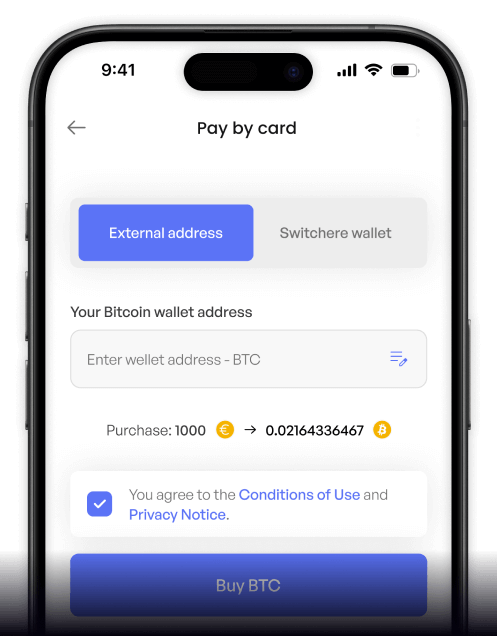 02
02Enter Your Crypto Wallet Address
Provide your wallet address and proceed with the payment.
-
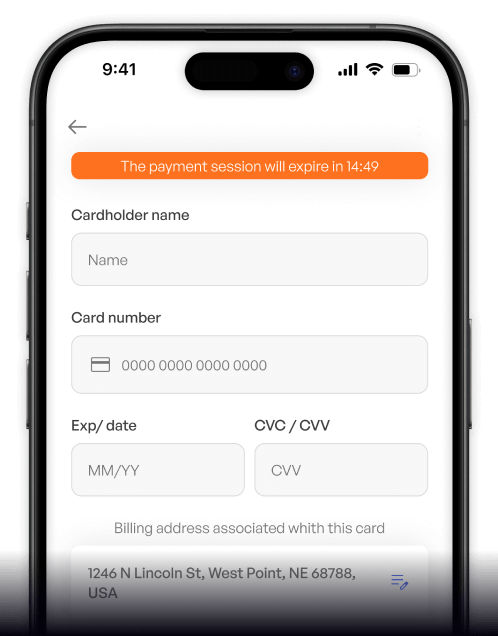 03
03Confirm the Payment and Receive Your Crypto
Make a payment and get the converted crypto to your wallet address.

Buy on the go
Anywhere. Anytime.
Buy crypto with your credit card from anywhere. Live rates, transparent fees, and 3D Secure on every order - the full Switchere card-buy experience in your pocket.



Scan to download the app iOS and Android

