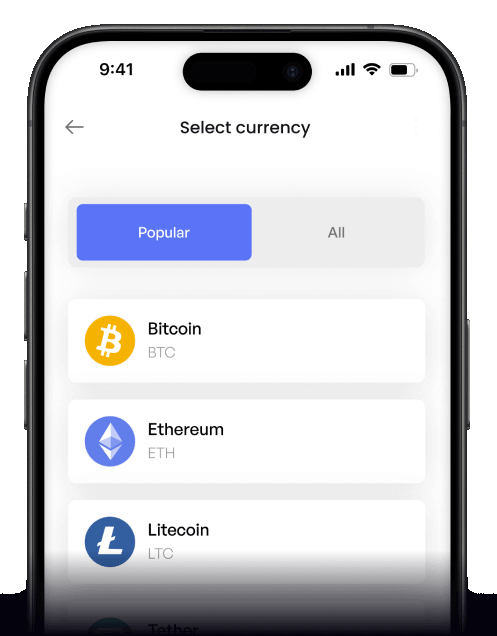
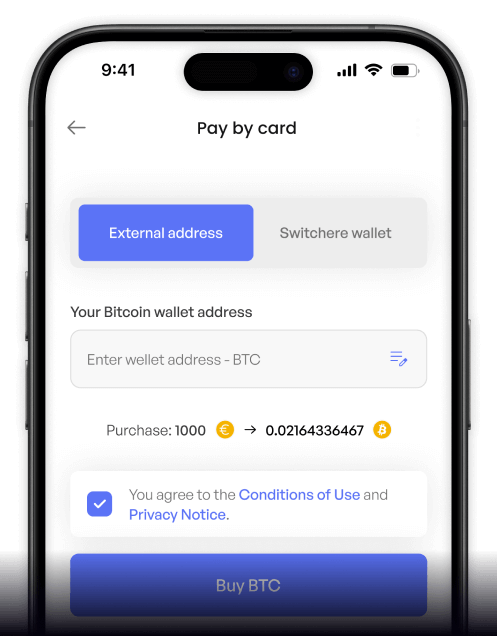
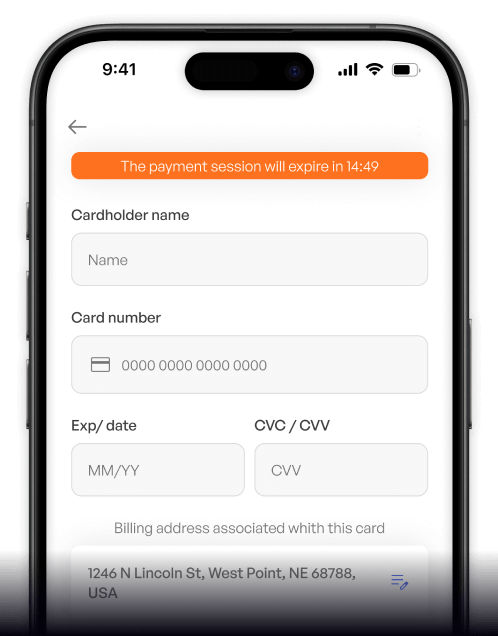


Convert
Indian Rupee (INR) to Bitcoin (BTC) Instantly
Purchase Bitcoin (BTC) with Indian Rupee (INR) easily at Switchere and benefit from fast, secure transactions.
About
Bitcoin (BTC)
Bitcoin (BTC), the pioneering cryptocurrency, has transformed the financial landscape with its decentralized nature, allowing users to perform transactions without intermediaries like banks. Powered by blockchain technology, Bitcoin's ecosystem consists of a distributed ledger that records all transactions transparently and securely, maintained by a global network of miners who validate blocks of transactions through a proof-of-work mechanism. Bitcoin's scarcity, capped at 21 million coins, positions it as a digital asset with deflationary characteristics, often seen as a hedge against inflation. The ecosystem supports a diverse range of applications, from peer-to-peer payments and remittances to decentralized finance (DeFi) projects, attracting widespread interest as both a store of value and a medium of exchange. Key features like security, transparency, and resistance to censorship make Bitcoin a robust and revolutionary asset in the world of finance, serving as the foundation for the broader cryptocurrency market and influencing the design and development of subsequent digital currencies.
How to Buy Bitcoin (BTC)
Popular Coins for Indian Rupee (INR)
Other Coins for Indian Rupee (INR)
Frequently asked questions
-
What are the most common methods to buy Bitcoin (BTC) with Indian Rupees (INR)?
The primary methods to acquire BTC with INR are through centralized cryptocurrency exchanges and Peer-to-Peer (P2P) platforms. Exchanges act as a fiat on-ramp, allowing direct digital asset purchases using common Indian payment methods like UPI, IMPS, or bank transfers after completing KYC/AML compliance. P2P platforms facilitate direct trades between users, often using an escrow service for security. -
What are the typical fees involved when converting INR to the Bitcoin network?
When converting INR to BTC, you'll encounter several fees. Cryptocurrency exchanges typically charge a trading fee (maker/taker fee) from the order book, which is a percentage of the transaction value. There might also be deposit fees for INR. When you withdraw your BTC to a personal wallet, you must pay a Bitcoin network transaction fee, measured in satoshis per byte (sat/vB), which compensates miners for securing the Proof-of-Work blockchain. -
How can I securely store my Bitcoin after a P2P INR trading purchase?
After a P2P INR trading purchase where BTC is released from escrow, it is critical to move the digital asset to a secure wallet that you control. For maximum security against online threats, a hardware wallet (cold storage) is recommended. For smaller amounts or frequent use, a non-custodial software wallet (hot wallet) can be used. Always back up your seed phrase offline and never share your private keys. -
Why is the INR/BTC trading pair considered a key fiat gateway in India?
The INR/BTC pair is a fundamental fiat gateway because it offers the highest liquidity and trading volume for Indian users entering the crypto market. Bitcoin is often viewed as 'digital gold' and is the most established digital asset. Therefore, most new capital from INR flows first into BTC, from which traders can then diversify into other cryptocurrencies. This direct on-ramp is crucial for accessing the broader blockchain ecosystem. -
What should I know about regulatory compliance (e.g., RBI guidelines) when trading INR for BTC?
The regulatory landscape in India is dynamic. While cryptocurrency is not illegal, users must transact through platforms that adhere strictly to KYC/AML compliance and PMLA guidelines. All reputable Indian exchanges require identity verification. It's crucial to stay updated on announcements from the Reserve Bank of India (RBI) and the government, as guidelines can impact banking access for digital asset purchases and taxation rules on crypto gains.
Could not find the answer to your question? Describe your issue in