


 Web
Web







What is Litecoin? Everything You Need to Know
 Oliver Grant
|
Oliver Grant
|
Sep 07, 2026

Purchase Litecoin (LTC) with Kenyan Shilling (KES) easily at Switchere and benefit from fast, secure transactions.
Litecoin (LTC) stands as one of the earliest and most established cryptocurrencies, often referred to as the 'silver to Bitcoin's gold.' Launched in 2011 as a fork of the Bitcoin Core client, its primary purpose was to create a faster and lighter version of Bitcoin, suitable for everyday transactions. This digital asset operates on a decentralized network utilizing a Proof-of-Work (PoW) consensus mechanism, but distinguishes itself with the Scrypt hashing algorithm. This choice was initially aimed at allowing CPU and GPU miners to participate more effectively, though specialized Scrypt ASICs have since become dominant for mining this cryptographic security-focused coin.
Key distinguishing features of Litecoin include its faster block generation time, approximately 2.5 minutes compared to Bitcoin's 10 minutes, leading to quicker transaction confirmations. The LTC token serves as the native currency for paying transaction fees on its blockchain technology and is widely accepted as a medium of exchange and a store of value. Litecoin has historically been a pioneer in adopting new technologies, such as Segregated Witness (SegWit) which improves transaction throughput, and more recently, the MimbleWimble Extension Blocks (MWEB) upgrade, offering users opt-in privacy and enhanced fungibility for on-chain transactions. Its longevity and consistent development have solidified Litecoin's position as a significant and reliable peer-to-peer digital currency within the broader Web3 infrastructure and digital ledger ecosystem.
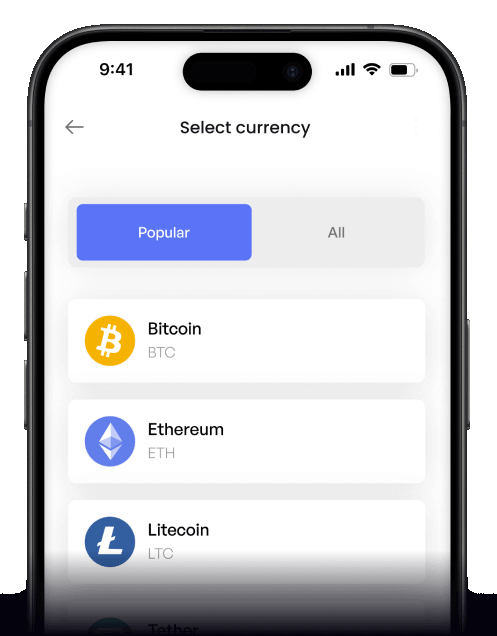
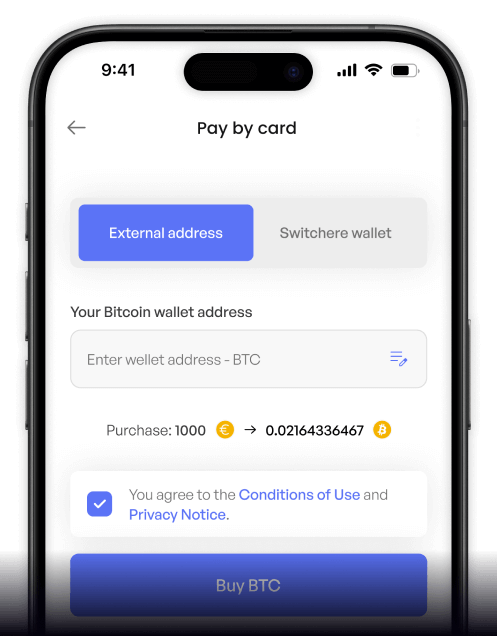
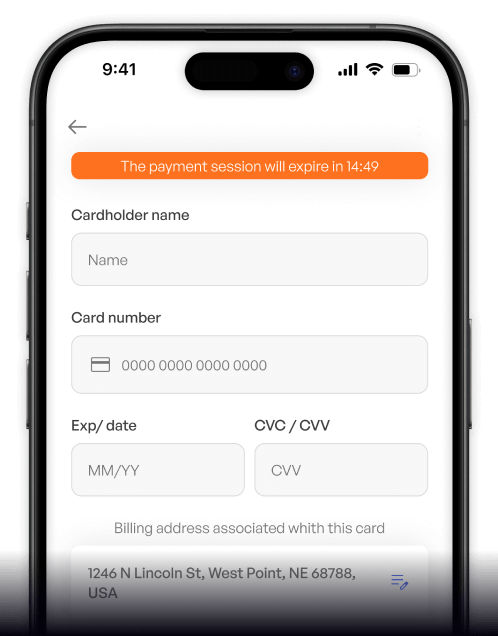
 Step-by-step guidance
 Easy credit card payments
 Streamlined purchase process
Oliver Grant
|
Streamlined purchase process
Oliver Grant
|
 Farouk Ahmed
|
Farouk Ahmed
|
Farouk Ahmed
|
Farouk Ahmed
|
Buy crypto with your credit card from anywhere. Live rates, transparent fees, and 3D Secure on every order - the full Switchere card-buy experience in your pocket.



Scan to download the app iOS and Android

Our website uses cookies. Our Cookie Policy
