


Hvad er Max Pain-punktet i optionshandel?
En dybdegående guide til at forstå teorien om maksimalt finansielt tab for optionsudstedere og dens potentielle indvirkning på markedspriser.
Grundlæggende om optionshandel: En hurtig introduktion
Før vi kan analysere Max Pain, er en grundlæggende forståelse af optioner nødvendig. En option er en finansiel kontrakt, der giver køberen retten, men ikke pligten, til at købe eller sælge et underliggende aktiv til en forudbestemt pris inden for en bestemt tidsramme. Der findes to primære typer: call options, som giver retten til at købe, og put options, som giver retten til at sælge. Hver kontrakt har en specifik strike price, som er den pris, aktivet kan købes eller sælges til, og en expiration date, hvorefter kontrakten udløber. En option er 'in-the-money (itm)', hvis den har en iboende værdi, og 'out-of-the-money (otm)', hvis den ikke har. Disse grundlæggende elementer er afgørende for at forstå, hvordan markedskræfterne, som Max Pain-teorien beskriver, fungerer.

Introduktion til Max Pain-teorien
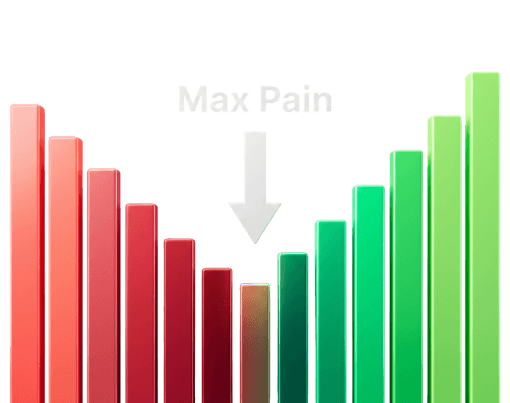
Max Pain-teorien er et koncept inden for optionshandel, der postulerer, at prisen på et underliggende aktiv har en tendens til at bevæge sig mod et bestemt prispunkt, når udløbsdatoen nærmer sig. Dette prispunkt, kendt som 'Max Pain-punktet', er det niveau, hvor det største antal optioner (både calls og puts) ville udløbe værdiløse, altså out-of-the-money. Teorien antyder, at dette scenarie forårsager det maksimale økonomiske tab – eller 'smerte' – for optionskøbere, samtidig med at det maksimerer profitten for optionssælgerne (også kendt som udstedere). Det er en kontroversiel idé, der bygger på antagelsen om, at markedet, bevidst eller ubevidst, søger at minimere de samlede udbetalinger fra udstederne.
Max Pain-punktet er den strike-pris, hvor det største antal optionskontrakter (puts og calls) udløber værdiløse, hvilket resulterer i det maksimale økonomiske tab for optionskøbere og maksimal profit for sælgere.
Afkodning af beregningen: Sådan bestemmes Max Pain-punktet
Beregningen af Max Pain-punktet er ikke en kompleks matematisk formel, men snarere en proces baseret på data om åbne positioner. Processen involverer at analysere den samlede værdi af udestående optioner ved forskellige prisniveauer. Først identificeres alle tilgængelige strike-priser for en given expiration date. Derefter beregnes den samlede nominelle værdi for alle call- og put-optioner, der ville være in-the-money for hver enkelt strike-pris. Det gøres ved at tage det samlede antal åbne kontrakter (open interest) og gange det med forskellen mellem aktivets pris og kontraktens strike-pris. Det maximum pain point er den strike-pris, hvor den samlede dollarværdi af disse in-the-money-kontrakter er lavest. Dette punkt repræsenterer den mindste samlede udbetaling for optionsudstederne.
Det samlede antal åbne optionskontrakter.
Alle tilgængelige udløsningspriser for en given udløbsdato.
Den strike-pris, der minimerer den samlede udbetaling.
Udløbseffekten: Hvordan optionsudløb former markedsdynamikken
Når en options expiration, ofte kaldet OPEX (Options Expiration), nærmer sig, kan markedsdynamikken ændre sig. Ifølge Max Pain-teorien kan store institutionelle aktører, der har solgt store mængder optioner, have en interesse i at se prisen på det underliggende aktie bevæge sig mod Max Pain-punktet. Rationalet er, at dette minimerer deres potentielle udbetalinger til contract holders. Dette kan teoretisk set føre til et fænomen kendt som 'pinning', hvor aktiekursen handler meget tæt på en bestemt strike-pris i dagene op til udløb. Sådan option expiry behaviour kan intensivere short-term trading activities, da markedsdeltagere reagerer på disse potentielle prisbevægelser. Det er dog vigtigt at bemærke, at dette er en teori, og mange andre faktorer påvirker prisen.
Nøglebegreber ved udløb
Pinning: Et fænomen, hvor prisen på et underliggende aktiv har en tendens til at handle meget tæt på en bestemt strike-pris med høj open interest, når udløbsdatoen nærmer sig.
OPEX (Options Expiration): Henviser til den dag, typisk den tredje fredag i måneden, hvor mange aktieoptionskontrakter udløber. Dette kan føre til øget handelsvolumen og volatilitet.
Anvendelse af Max Pain i markedsanalyse
Det er afgørende at forstå, at Max Pain ikke er et handelssignal, men et analytisk værktøj. Nogle markedsanalytikere bruger Max Pain-niveauet som en datapunkt for at vurdere den overordnede markedssentiment, især i liquid options markets for store indices som OMXC25. Det kan give en indikation af, hvor en stor mængde finansiel interesse er koncentreret. For eksempel kan en Max Pain-pris langt fra den nuværende kurs indikere et potentielt pres i en bestemt retning, men det er ikke en garanti for price action. At kombinere denne information med andre analyseformer som trading with the trend eller teknisk analyse kan give et mere nuanceret billede. Det handler om at forstå potentielle priszoner, ikke om blindt at tage long option positions baseret på en enkelt teori.
- Giver indsigt i markedssentiment.
- Identificerer prisniveauer med høj finansiel interesse.
- Kan bruges som en del af en bredere analyse.
- Er ikke en forudsigende indikator.
- Ignorerer fundamentale nyheder og trends.
- Kan give falske signaler, hvis den bruges isoleret.
Et kritisk blik: Begrænsninger og kritik af Max Pain
På trods af sin popularitet i visse kredse, har Max Pain-teorien betydelige begrænsninger og møder berettiget kritik. En af de største indvendinger er dens inaccuracies; teorien holder ofte ikke stik i praksis. Stærke market trends, uventede news eller makroøkonomiske begivenheder kan let overskygge den teoretiske tiltrækning mod Max Pain-punktet. At bruge den som en standalone indicator er yderst risikabelt og kan føre til potential loss. Teorien hviler også på antagelsen om, at optionsudstedere har både evnen og viljen til at manipulere prisen på det underliggende aktiv hen imod en bestemt strike price ved expiration. I nutidens komplekse og højt regulerede markeder er denne antagelse tvivlsom. De fleste professionelle ser det som en interessant observation snarere end en handlingsorienteret strategi.
Korrelation er ikke det samme som kausalitet. Selvom en aktiekurs lejlighedsvis lander nær Max Pain-punktet, beviser det ikke, at teorien er årsagen.
Ofte stillede spørgsmål
-
Er Max Pain et garanteret kursmål for et aktiv?
Nej, absolut ikke. Max Pain er en teori om markedstendenser, ikke et forudsigende værktøj. Det repræsenterer et punkt med maksimalt potentielt tab for optionskøbere, men der er ingen garanti for, at prisen vil nå dette niveau. -
Hvor ofte er Max Pain-teorien præcis?
Teoriens præcision er meget omdiskuteret og ofte upålidelig. Mange studier har vist, at dens forudsigelseskraft er begrænset. Eksterne faktorer som markedsnyheder, investorernes sentiment og overordnede økonomiske trends har en meget stærkere indflydelse på prisen. -
Gælder Max Pain for alle aktier og aktiver med optioner?
Teorien anses for at være mere relevant for aktier og indekser med meget likvide og aktive optionsmarkeder. For aktiver med tynd handel med optioner er datagrundlaget (open interest) for lille til, at beregningen har nogen meningsfuld betydning. -
Hvem tjener på, at prisen på det underliggende aktiv lukker på Max Pain-punktet?
Optionssælgerne (også kaldet udstedere) er dem, der potentielt tjener mest. Når flest mulige optioner udløber værdiløse, kan sælgerne beholde den præmie, de modtog for at sælge kontrakterne, uden at skulle udbetale noget. -
Bør jeg basere mine handelsbeslutninger udelukkende på Max Pain-prisen?
Nej, det frarådes kraftigt. At basere beslutninger udelukkende på Max Pain er en risikabel strategi. Det bør højst betragtes som ét datapunkt blandt mange i en omfattende analyse, der også inkluderer teknisk og fundamental analyse samt robust risikostyring.
Krypto-guider
Begynder-frendly
Forståelse af de finansielle markeder og handelens mekanismer En analytisk gennemgang af hvordan markedsdeltagere interagerer med forskellige aktiver og handelsplatforme.
 Farouk Ahmed
|
Farouk Ahmed
|
Mekanikken bag Intraday Trading Forstå platformene, markedsdynamikkerne og systemerne bag moderne dagshandel.
 Alexey Morozov
|
Alexey Morozov
|
Strukturering af markedsaktiviteter gennem en virksomhed Forstå de tekniske og organisatoriske aspekter ved at overføre kapitalforvaltning til et formelt selskab.
 Oliver Grant
|
Oliver Grant
|

Vores hjemmeside bruger cookies. Vores cookiepolitik