


How to Open a Prop Trading Firm
Navigate the operational structure, core technology requirements, and capital forecasting needed to scale a sustainable trading business.
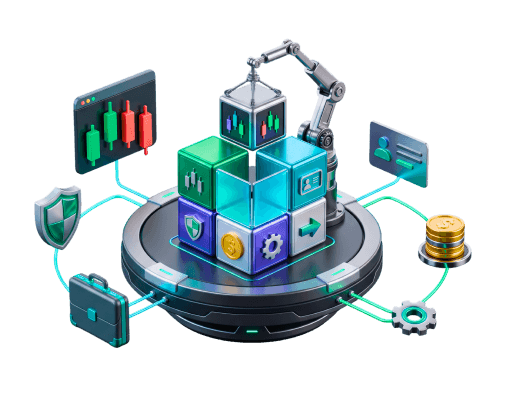
Trading Models and Jurisdictional Setup
Building a proprietary trading firm starts with defining your trading program structure. Founders must decide between offering trader challenges or providing instant funding. Both paths require a robust trading platform and integration into a broader partner ecosystem to ensure fast onboarding. Establishing clear company setup parameters and selecting the right jurisdiction immediately impacts your operational limits. Legal and regulatory compliance dictate your main acquisition routes and overall market reach. Challenge-based evaluation requires traders to prove their skills before receiving capital. Instant funding bypasses this phase but demands stricter upfront capital controls.
- Challenge models generate upfront evaluation revenue
- Instant funding attracts experienced volume traders
- High operational overhead for evaluation tracking
- Strict jurisdictional restrictions on direct funding

Capital Structuring and Financial Forecasting
Accurate forecasting frameworks drive long-term business valuation. Your business plan must detail realistic revenue assumptions, focusing heavily on incoming challenge fees and profit sharing ratios. Founders need clear visibility into expense categories like software licensing and ongoing compliance requirements. Maintaining healthy cash flow means separating operating capital from trader payout reserves. Funding structures often rely on initial private financing to cover technical setup and liquidity margins. You must calculate the exact fees per active account to accurately model your profitability timeline.
Founders must maintain sufficient reserves to cover all profit-split obligations and platform fees without relying solely on immediate challenge revenues.
Practical models never assume all users will fail their evaluations. Structuring your prop firm correctly ensures you can meet all financial obligations during peak withdrawal cycles.
Core Technology and Trading Infrastructure
Building a competitive tech stack requires seamless integration between multiple specialized systems. Platform selection and connection requirements dictate how efficiently your business operates under heavy volume. A robust crm acts as the central hub for managing client profiles and monitoring deep analytics. You need a highly reliable bridge to route market flow to liquidity providers without noticeable latency. The risk engine sits at the core of your infrastructure to enforce trading parameters in real time.
Core Tech Stack Components
A bridge connects your trading platform to liquidity providers, while the dedicated risk engine monitors aggregate exposure.
Integrating internal kyc modules directly into the dashboard ensures immediate user verification. Strong payment system integrations complete the partner ecosystem by allowing automated transactions. This specific infrastructure configuration prevents processing bottlenecks and protects your operational stability.
Banking Relationships and Payout Workflows
Establishing reliable business bank accounts is a major hurdle for new proprietary trading firms. Traditional banks apply strict scrutiny to this specific business model. You must partner with specialized payment processors to handle global transactions efficiently. Evaluating payment processors involves analyzing complex integration capabilities and transaction fees. Smooth payment workflows keep traders satisfied and heavily protect your brand reputation. You need rigid withdrawal and payout procedures perfectly aligned with your stated payout rules.
Automated processors reduce withdrawal times significantly.
Corporate accounts require extensive compliance documentation.
Automation considerations speed up onboarding, evaluations, and payouts without sacrificing network security. Maintaining high transparency standards around all trader payouts prevents public disputes and builds systemic trust.
Advanced Risk Management and Exposure Controls
Protecting corporate capital dictates every single operational decision you make. You must deploy advanced risk monitoring tools to track open positions across all funded accounts simultaneously. Implementing real-time risk and exposure tracking prevents runaway losses during volatile market sessions. Establish rigid risk frameworks and rules for traders to define maximum daily drawdowns and acceptable trading behaviors.
Protecting capital requires aggressive real-time monitoring rather than relying entirely on end-of-day drawdown reports.
Overall firm exposure management requires aggregating these individual metrics to view your total market liability constantly. Automated risk controls instantly liquidate positions that breach your defined parameters. You must also implement strict prop fraud controls to detect high-frequency arbitrage abuse or coordinated group trading. Maintaining absolute risk integrity ensures the long-term survival of your enterprise.
Staffing and Internal Operations
Scaling a trading business requires a solid administrative structure and highly capable personnel. Your operational plan must define clear internal responsibilities across all active departments. Key staffing requirements include dedicated risk managers, compliance officers, and rapid customer support representatives. Structuring these organizational roles effectively prevents workflow bottlenecks during periods of high user registration.
| Department | Core Function | System Access |
| Compliance | AML and KYC Verification | CRM Dashboard |
| Risk Management | Exposure Monitoring | Risk Engine Platform |
Implementing strict hiring frameworks ensures you bring on professionals who understand the nuances of the financial sector. The compliance team handles ongoing aml and kyc verification to meet global financial regulations. Maintaining operational continuity means cross-training staff to handle multiple systems seamlessly. Documenting your operational policy requirements creates a standardized environment where every team member executes properly.
Trader Acquisition and Retention Strategies
Attracting profitable users requires a highly targeted talent acquisition strategy. An education-driven acquisition strategy builds a loyal community by providing resources that help users pass their evaluations. Designing an intuitive trader dashboard improves the overall user experience during the challenge and assessment stages. You must define clear trader behavior guidelines to ensure users understand the rules entirely before purchasing an evaluation. Categorizing your audience into distinct trader segments allows for highly personalized marketing campaigns. Launching custom affiliate programs and structured referral programs drives organic growth without massive upfront advertising spend. Supporting your users through comprehensive trader support and training encourages long-term platform retention. Transparent communication regarding specific trader evaluation criteria directly impacts your brand reputation in the market.
Scalability and Long-Term Expansion
Achieving sustainable growth requires continuous optimization of your existing technology systems. Your long-term vision should include expanding into new asset classes and geographic regions based on thorough market analysis. Scaling the firm demands absolute operational stability to handle thousands of concurrent global connections. Building robust partner networks opens doors for better institutional liquidity pricing and advanced technology integrations. You must adapt your marketing strategy frequently to stay ahead of aggressive competitors entering the space. Evaluating potential acquisitions allows you to absorb smaller firms and instantly acquire their active user base. Developing a clear exit strategy provides founders with a tangible roadmap for selling the business or going public once peak enterprise valuation is reached.
Frequently asked questions
-
How much capital is required to start a proprietary trading firm?
Initial startup costs range significantly depending on the technology stack and jurisdiction, typically requiring reserves for software licensing, liquidity margins, and operational overhead. -
What is the most critical software component for risk management?
A dedicated risk engine that integrates directly with the trading platform is required to monitor aggregate exposure and enforce drawdown limits automatically. -
How do prop firms process global trader payouts?
Firms partner with specialized B2B payment processors and crypto gateways to automate withdrawal procedures while meeting global compliance standards. -
Which legal structures work best for new trading firms?
Founders generally register corporate entities in jurisdictions offering clear regulatory frameworks for proprietary trading, ensuring smooth banking and payment integrations. -
Why is a dedicated CRM necessary for challenge-based models?
A highly customized CRM tracks client evaluation progress, manages KYC verification, and automates account creation across the entire trading platform ecosystem.
Crypto guides
Beginner-frendly
The Informational Guide to Trading Mechanics Understand the foundational concepts, systems, and structures that drive global financial markets
 Farouk Ahmed
|
Farouk Ahmed
|
Intraday Trading Mechanics Analyzing the technical execution, risk parameters, and software infrastructure behind daily market operations.
 Alexey Morozov
|
Alexey Morozov
|
How to Put Day Trading Profits Under an EIN An objective breakdown of transitioning from retail market participation to operating a structured commercial entity.
 Oliver Grant
|
Oliver Grant
|

Our website uses cookies. Our Cookie Policy