


The Ultimate Guide to Crypto Leverage Trading
Learn how traders use borrowed capital to amplify potential returns and the critical risks you need to manage.
Understanding the Fundamentals of Leverage Trading
Leverage trading is a mechanism that allows traders to control a large position in an asset using a relatively small amount of their own capital. Think of it as a tool for magnifying exposure. The core idea is simple: you borrow funds to increase your buying or selling power. The amount you put up is called collateral, also known as the initial margin. The size of the loan relative to your margin is expressed as a leverage ratio, such as 5x, 20x, or even 100x. For example, with 10x leverage, every dollar of your capital controls ten dollars worth of the cryptocurrency. This full position size is called the notional value. To keep a leveraged trade open, you must maintain a certain percentage of its value in your account, known as the maintenance margin. If your position moves against you and your margin drops below this level, you face a margin call and, ultimately, the risk of liquidation, where the exchange automatically closes your position to cover the loan. The specific price at which this occurs is the liquidation price.

The Mechanics: How Leverage Trading Works in Crypto
When a trader opens a leveraged position on a cryptocurrency exchange, they are essentially taking out a short-term loan. First, the trader deposits funds that will serve as collateral. Then, they decide whether to open a long position, speculating that the asset's price will rise, or a short position, speculating it will fall. After selecting a leverage ratio, the platform provides the borrowed capital to create the full position. While the trade is open, any profits or losses are considered an unrealized gain or loss. These only become real when the position is closed. Platforms that offer perpetual contracts, a popular instrument for leverage, use a mechanism called funding fees. These are periodic payments exchanged between traders holding long and short positions to keep the contract price aligned with the underlying asset's spot price. This entire process relies on the exchange acting as the lender, which introduces a degree of counterparty risk for the user.
A Spectrum of Tools: Types of Crypto Leverage Trading
Leverage isn't a single product but a feature available through various financial instruments. The most straightforward form is margin trading on the spot market, where traders borrow funds directly from an exchange or other users to buy or sell cryptocurrencies. A more common method involves derivatives. Futures contracts, for instance, are agreements to buy or sell an asset at a predetermined price on a specific future date. In crypto, the perpetual futures contract is especially popular because it has no expiry date. Instead, it uses funding fees to tether its price to the underlying asset. Beyond futures, options contracts give the holder the right, but not the obligation, to buy or sell an asset, and leverage is inherent in their structure. Some platforms outside of certain jurisdictions offer Contracts for Differences (CFDs), which allow traders to speculate on price movements without owning the actual cryptocurrency. Each of these instruments from different asset classes provides a unique way to apply leverage and margin trading strategies.
The Double-Edged Sword: Advantages and Risks of Leverage
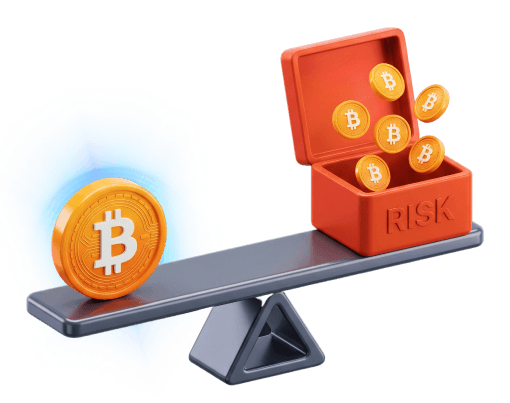
The primary appeal of leverage is capital efficiency. It allows traders to open substantial positions with a fraction of the required capital, freeing up funds for other opportunities or for hedging existing investments. For instance, a miner might use a leveraged short position to protect against a potential drop in the price of the crypto they hold. However, this amplification works both ways. Just as profits can be magnified, so too can losses. The extreme volatility of the crypto market makes this risk particularly acute. A small price movement in the wrong direction can wipe out a trader's entire initial margin, resulting in liquidation. This is not a suggestion but an automatic action by the exchange's risk engine. Additional risks include interest costs on the borrowed funds and the psychological pressure of managing a high-stakes position, which can lead to poor decision-making. The use of stop-loss orders is a common technique traders employ to try and mitigate these risks before liquidation occurs.
Liquidation is an automated, forced closure of your trading position. It happens when the market moves against you and your collateral can no longer cover the potential loss. You lose your initial margin, and the trade is closed permanently. It is the most significant risk in leverage trading.
Practical Scenarios: Leverage Trading Examples
To make this concrete, imagine a hypothetical BTC trade. A trader believes the price of BTC, currently at $50,000, will rise. They decide to open a 10x long position with $1,000 of their own margin. This gives them a notional value of $10,000 (10 x $1,000), allowing them to control 0.2 BTC. If BTC's price increases by 5% to $52,500, the value of their position becomes $10,500. Their profit is $500, which is a 50% return on their initial $1,000 margin. Now, consider the downside. If BTC's price drops by 5% to $47,500, their position's value falls to $9,500, resulting in a $500 loss—50% of their margin. A price drop of just under 10% would approach the liquidation point, and the exchange would close the trade, causing the loss of the entire $1,000. For a short position, the logic is reversed; the trader profits if the price goes down. Many platforms offer a demo account, which is a valuable tool for understanding these dynamics without risking real capital.
Your Safety Net: Critical Risk Management in Leveraged Positions
Given the high stakes, risk management is not optional; it is fundamental to engaging with leveraged products. The most basic tool is the stop-loss order, which automatically closes a position if it reaches a certain price, defining the maximum acceptable loss on a trade before a forced liquidation can occur. Another key practice is position sizing. This involves determining how much capital to allocate to a single trade, ensuring that a loss, even if a stop-loss is triggered, does not significantly impact the total portfolio. Proper diversification across different assets and strategies can also help mitigate risk. Furthermore, traders should be mindful of the maximum leverage limits offered by a platform and understand that using lower leverage ratios drastically reduces liquidation risk. Some exchanges offer negative balance protection, a crucial feature that ensures a trader cannot lose more than the total funds in their account, protecting them from owing the exchange money after a catastrophic market event.
Frequently asked questions
-
What is a 'liquidation price' in crypto leverage trading?
The liquidation price is the specific price point at which an exchange's system automatically closes your leveraged position to prevent further losses. This happens when your margin can no longer cover the loss on the trade. At this point, you lose your entire initial collateral for that position. -
Can I lose more money than my initial investment?
Generally, on most modern crypto exchanges, you cannot lose more than the funds in your trading account. Many platforms offer 'negative balance protection,' which ensures your balance won't go below zero. However, you can easily lose 100% of the collateral you've put up for a specific trade if it gets liquidated. -
What is the difference between cross margin and isolated margin?
Isolated margin confines the risk to a single position. The margin you assign to that one trade is all you can lose. Cross margin, on the other hand, uses the entire balance of your available funds in your trading account as collateral for all open positions. This allows a losing position to draw margin from your overall balance to avoid liquidation, but it also means that one bad trade could potentially drain your entire account. -
How do stop-loss orders help manage risk in leverage trading?
A stop-loss order is a risk management tool that automatically closes your position at a predetermined price. By setting a stop-loss, you define the maximum amount you are willing to lose on a trade. This helps you exit a losing position before it deteriorates further and potentially gets liquidated, giving you control over your potential losses. -
Is leverage trading suitable for beginners?
Leverage trading is an advanced strategy and is generally not recommended for beginners. The high risk of rapid, significant losses requires a deep understanding of market dynamics, technical analysis, and disciplined risk management. New traders should focus on gaining experience in the spot markets and thoroughly educating themselves before even considering using leverage.
Crypto guides
Beginner-frendly
Beginner Guide to Trading in India Understand financial markets, manage risks, and learn platform mechanics step-by-step.
 Oliver Grant
|
Oliver Grant
|
How to Learn Online Trading A foundational guide to understanding financial markets, platforms, and risk management mechanics.
 Farouk Ahmed
|
Farouk Ahmed
|
Understanding Financial Trading Mechanics An objective examination of market operations, systemic risks, and how returns are theoretically generated.
 Alexey Morozov
|
Alexey Morozov
|

Our website uses cookies. Our Cookie Policy