

Polygon: Making Ethereum's Vision a Mainstream Reality
The Bottleneck to a Decentralized Future
Ethereum introduced the revolutionary potential of smart contracts and decentralized applications. Its vision centered on an open, transparent, and user-owned internet. As network popularity surged, severe congestion emerged. Millions of users competed for limited block space, causing transaction costs to skyrocket and confirmation times to slow significantly. This scalability bottleneck created a major barrier, making simple on-chain actions prohibitively expensive for average users and hindering the mainstream adoption of Web3 technologies.

A Multi-Lane Motorway for Ethereum
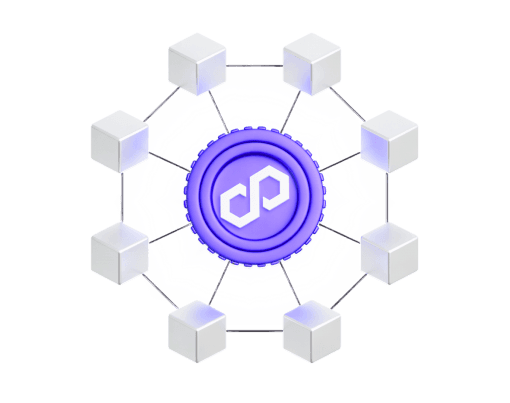
Polygon operates as a Layer 2 scaling solution designed to resolve network congestion. It functions as a high-speed parallel infrastructure built alongside Ethereum. Instead of processing every transaction directly on the crowded main network, Polygon bundles operations and processes them on its own efficient network layer. The protocol then periodically finalizes and secures these transactions on the Ethereum mainnet. This architecture allows Polygon to process thousands of transactions per second at a fraction of the base cost, while inheriting the robust security and decentralization of the underlying blockchain.
Unlocking Practical, Real-World Use Cases
Lower barriers to entry have cultivated a diverse Polygon ecosystem filled with innovative decentralized applications. Global payment systems leverage the network to send stablecoins across borders nearly instantly and for fractions of a cent. Blockchain gaming, decentralized finance, and social media platforms can offer responsive user experiences comparable to traditional web applications. Advancements such as account abstraction simplify wallet management, allowing newcomers to seamlessly interact with digital assets. By significantly reducing transaction fees, Polygon makes the Ethereum ecosystem accessible to a global audience.
The Road Ahead for Web3 Adoption
Polygon stands as a critical pillar in the evolution of the decentralized internet. By providing essential scaling infrastructure, it transforms Ethereum into a practical foundation for a user-centric Web3 environment. The native POL token underpins network security and governance following the recent migration from MATIC. Polygon serves as a fundamental catalyst, paving the way for a future where blockchain technology seamlessly integrates into daily digital interactions.
Please be advised that this article and any information on this site do not constitute investment advice. You should act at your own risk and seek professional advice before making any investment decisions.
Frequently asked questions
-
Is Polygon a separate blockchain from Ethereum?
Polygon is a Layer 2 scaling solution that operates alongside the Ethereum network. It processes transactions on its own high-speed blockchain to ensure low costs and fast confirmations, then anchors them to the Ethereum mainnet for security. This integration makes it a vital extension of the Ethereum ecosystem rather than a direct competitor. -
What is the POL token used for?
POL is the upgraded native token of the Polygon network, replacing MATIC. It pays for transaction fees, enables participation in network governance, and allows users to stake assets to help secure the network in exchange for rewards. -
Why are transaction fees on Polygon so much lower than on Ethereum?
Polygon achieves low fees by processing transactions on its high-capacity network. It bundles thousands of operations before settling them as a single proof on Ethereum. This cryptographic rollup method spreads the base layer transaction cost across many smaller transactions. -
Can I use my existing Ethereum wallet, like MetaMask, on Polygon?
Yes. Polygon is compatible with the Ethereum Virtual Machine. You can use an existing Ethereum wallet, such as MetaMask, to interact with the Polygon network by adding the Polygon RPC network details to your wallet settings. -
What is the main difference between Polygon and other Layer 2 solutions?
While many Layer 2 solutions focus on a single scaling technology, Polygon provides a comprehensive framework for building and connecting multiple types of scaling architectures. It offers tools like sidechains, zero-knowledge rollups, and validiums, allowing developers to choose the optimal scaling method for their applications.
Crypto guides
Beginner-frendly
Finding a Kriptomat Alternative in 2026
 Alexey Morozov
|
Alexey Morozov
|
Phemex & MiCA: Your 2026 Guide to EU-Compliant Crypto Alternatives
 Oliver Grant
|
Oliver Grant
|
Navigating the MiCA Landscape: A Guide to Bitunix Alternatives for EU Users
 Farouk Ahmed
|
Farouk Ahmed
|
