


What Is the Spread in Crypto Trading?
An essential guide to the primary cost of trading digital assets and the market dynamics that define it.
Introduction: Decoding the Spread in Cryptocurrency Trading
When you look at a price for a cryptocurrency, you're usually seeing two numbers: a price to buy and a price to sell. The gap between these two figures is known as the spread. It's not just a trivial detail; it represents one of the primary costs associated with executing a trade. Think of it as the immediate hurdle your position needs to overcome to become profitable. Understanding this concept is fundamental because it directly impacts your potential returns from the very start. Before any market movement can work in your favour, it must first cover the cost of the spread. This guide breaks down exactly what the spread is, how it's determined, and what other related costs and market events you need to be aware of when engaging with digital assets.
Купуйте криптовалюту швидко, легко і безпечно з Switchere!

Скануйте, щоб завантажити додаток
The Mechanics: How Is the Crypto Spread Calculated?
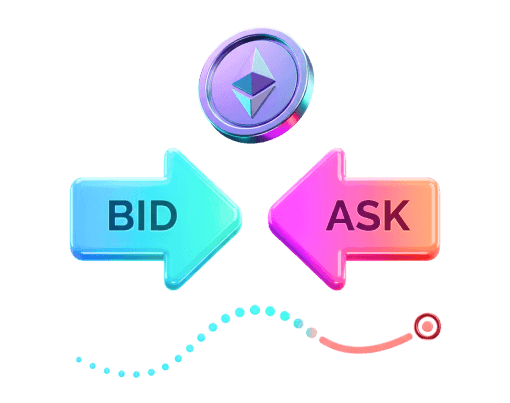
The spread is fundamentally the difference between what buyers are willing to pay (the bid price) and what sellers are willing to accept (the ask price). This is often called the `bid-ask spread`. Several powerful forces influence its size. The most significant are liquidity and volume; markets with high trading activity and a large number of participants, often indicated by a high market capitalisation, tend to have tighter, or smaller, spreads. Conversely, less popular coins have wider spreads. Market volatility also plays a huge role. During periods of rapid price fluctuation, the spread often widens as a form of risk premium for market makers.
A platform's spread is typically composed of a `market-based component` sourced from major exchanges, combined with an operational fee, sometimes referred to as an `ig admin fee`. This combined figure is the final spread presented to the user. This mechanism applies whether you are speculating on `cryptoasset prices` rising through `long and short positions` or engaging directly with assets built on `distributed ledger technology (dlt)`. It's the core `fee charged on crypto transactions` for market access.
The bid is the highest price a buyer will pay for an asset, while the ask is the lowest price a seller will accept. The spread is the difference between them, representing a key transaction cost.
The Gatekeepers: Who Is Eligible for This Type of Crypto Trading?
The regulatory environment for crypto trading is specific, particularly in the United Kingdom. Following `FCA rules`, the sale of crypto-derivatives like `CFDs` and `spread bets` to retail consumers is banned. This means that for many individuals, direct exposure to these instruments isn't possible. However, the rules make a distinction for `professional traders`. To qualify for a `professional account`, an individual must meet stringent criteria, which typically involve proving a certain level of trading experience, a significant portfolio size, or demonstrating substantial `cryptocurrency holdings`. The threshold can be high, sometimes requiring proof of a portfolio exceeding a certain value or having placed trades of `£250,000 notional` value with sufficient frequency.
This framework is designed to protect less experienced individuals from highly volatile instruments. For those who do qualify, it opens up access to products managed by `liquidity providers` on a `major exchange`, allowing for different trading strategies. But it also comes with a different risk profile and a reduced level of regulatory protection.
- Access to crypto derivatives (CFDs, spread bets).
- Potentially higher leverage limits.
- Fewer restrictions on products.
- Reduced regulatory protections (e.g., no negative balance protection).
- Higher capital and experience requirements.
- Assumes a sophisticated understanding of risks.
Beyond the Spread: Understanding Overnight Funding Charges
While the `bid-ask spread` is a one-off cost to open or close a position, it's not the only expense to consider, especially for leveraged products like `crypto spread bet positions`. If you keep a position open past the market's daily cut-off time, you'll likely incur an `overnight funding` charge. This `daily funding adjustment` is essentially an interest payment that reflects the `cost of funds` required for the provider to maintain your leveraged position. It's a fee for borrowing the capital that allows you to control a position larger than your deposit.
The `funding calculation` is based on the full `notional value` of your trade, not just the margin you put down. For `long positions`, you will typically pay a charge based on the platform's `overnight funding rate`. For `short positions`, the charge can be different and, in some rare market conditions, you might even receive a credit. This charge is a critical component of the total cost for trades held for more than a day.
Key Funding Terms
Notional Value: The total value of a position (e.g., 1 BTC worth £50,000 has a notional value of £50,000), not just the margin used to open it.
Funding Rate: The interest rate used by the platform to calculate the overnight charge, often based on a benchmark rate plus a markup.
Market Earthquakes: How Blockchain Forks Affect Trading Positions
The crypto market has unique technical risks, and none is more significant than a `hard fork`. This event occurs when a `decentralised ledger` undergoes a radical change, creating a `blockchain split`. The result is often the birth of a `viable second cryptocurrency`. When this happens, it can have a direct impact on open trading positions. Trading platforms have specific protocols to manage these events. Typically, you will receive a `notification of blockchain forks` in advance if one is anticipated.
How `client accounts` are handled varies. A common approach is for the platform to create an `equivalent position` for clients on the new cryptocurrency, provided it is supported and has sufficient liquidity from `market-makers`. The `price basis` of the original position might also be adjusted to reflect the change in the `underlying market`. However, it is always the trader's `responsibility for awareness of forks` and to understand their platform's specific policy on these events, as they can introduce significant volatility and uncertainty.
A hard fork creates two separate transaction histories from a common starting point, meaning balances are duplicated but their future paths diverge entirely.
When the Market Freezes: Trading Availability and Restrictions
Cryptocurrency markets don't always run smoothly. Platforms may enforce a `trading suspension` or other `order restrictions` for several reasons. Extreme `price volatility` is a primary cause, as it can make it impossible for `liquidity providers` to offer consistent pricing. A `hard fork` is another event that often leads to a temporary halt in trading on the affected asset. During these periods, a market might be placed in `position reduction` only mode, which means you can close existing positions but cannot open new ones. This is done to reduce risk for both traders and the platform.
In other scenarios, a market may become 'unlongable,' meaning you cannot open new buy positions due to a lack of available liquidity or extreme borrowing costs. For leveraged accounts, severe market moves can also trigger a `margin call`, which may lead to the automatic closure of positions. These are essential risk management tools used by platforms to navigate the often chaotic conditions of digital asset markets.
| Restriction Type | What It Means | Common Cause |
| Trading Suspension | All trading (opening and closing) is halted. | Extreme volatility, technical issues, hard fork. |
| Position Reduction Only | You can only close existing positions. | Reduced liquidity or pre-fork preparations. |
| Unlongable Market | New buy (long) positions are blocked. | Lack of borrowing liquidity. |
Navigating the Crypto Market: Key Takeaways
Understanding the spread is the first step, but it's far from the whole picture. The true cost of trading cryptocurrencies involves a wider awareness of all potential charges and market-specific risks. The initial `bid-ask spread` is your entry fee, but for positions held over time, `overnight funding` charges can accumulate and become a significant factor. Furthermore, the regulatory landscape determines who can access certain products, with clear lines drawn between retail and professional clients.
Beyond costs, the unique technical nature of crypto introduces risks like hard forks, which can fundamentally alter an asset and impact open positions. Market stability isn't guaranteed either; trading suspensions and liquidity shortages are real possibilities. A thorough understanding of these dynamics—from spreads and funding to forks and restrictions—is crucial for anyone looking to navigate the complex but fascinating world of digital assets.
A one-time cost to open or close a trade.
A recurring charge for leveraged positions held overnight.
Unique events that can halt trading and impact positions.
Поширені запитання
-
Is the spread the only fee I pay when trading crypto?
No. While the spread is a primary cost for opening and closing a trade, if you hold a leveraged position (like a CFD or spread bet) overnight, you will also incur an overnight funding charge. This is a fee for the capital you are borrowing. -
Why can't I trade crypto derivatives as a retail client in the UK?
The Financial Conduct Authority (FCA) has banned the sale of cryptocurrency derivatives, such as CFDs and spread bets, to retail consumers to protect them from high risk and volatility. Only traders who meet the strict criteria for a professional account are eligible. -
What happens to my open trade during a hard fork?
This depends on your platform's policy. They may pause trading on the asset, and if the new forked coin is viable and supported, they might create an equivalent position for you on the new chain. It is vital to read your platform's specific terms and stay informed. -
What is an overnight funding charge?
It is an interest charge applied to leveraged positions held open past a daily cut-off time. The charge is calculated based on the total notional value of your position and covers the cost of borrowing the funds needed to maintain the trade. -
Why would a platform suddenly stop trading for a specific cryptocurrency?
Trading can be suspended for several reasons, including extreme price volatility, a lack of liquidity from market makers, major technical issues on underlying exchanges, or a significant market event like an upcoming hard fork.
Крипто-гіди по криптовалютам
Для початківців
Механіка фінансових ринків Аналіз інструментів, структур виконання ордерів та принципів функціонування сучасного трейдингу.
 Farouk Ahmed
|
Farouk Ahmed
|
Механіка внутрішньоденної торгівлі Як функціонують біржові платформи, аналізуються дані та виконуються ордери протягом одного дня
 Alexey Morozov
|
Alexey Morozov
|
Як перевести прибуток від ділової торгівлі на EIN Огляд корпоративних структур для професійних учасників фінансових ринків та управління капіталом
 Oliver Grant
|
Oliver Grant
|

Наш сайт використовує файли cookie. Наша політика щодо файлів cookie