


Crypto Futures Explained: A Guide Beyond Spot Trading
Understand the contracts, leverage, and risks that define the world of crypto derivatives.
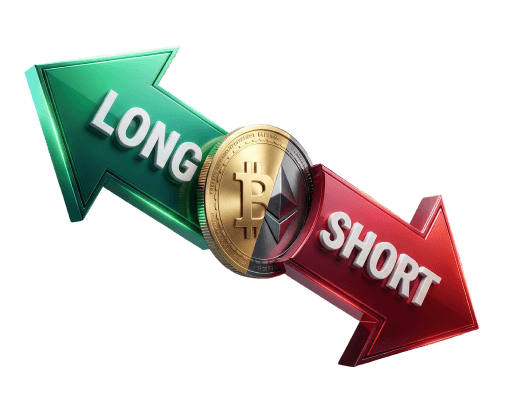
The Core Difference: Crypto Futures vs. Spot Trading
Understanding crypto futures begins with a clear distinction from spot trading. When you engage in spot trading, you buy or sell a cryptocurrency like Bitcoin or Ethereum directly. You take ownership of the actual asset, which then sits in your wallet. The goal is simple: buy low, sell high. Crypto futures operate on a completely different premise. Instead of trading the asset itself, you are trading a contract that represents an agreement to buy or sell the asset at a specific price on a future date. You don't own the underlying crypto; you are speculating on its future price movement.
A futures contract is a type of derivative, meaning its value is derived from an underlying asset. This setup allows traders to gain exposure to an asset's price without ever needing to hold it.
This fundamental shift from ownership to speculation changes everything. Your strategy is no longer just about long-term holding. With futures, you can profit from prices going down (shorting) just as easily as you can from prices going up (longing). This introduces more complex strategies but also elevates the risk profile significantly compared to the straightforward nature of spot market prices.

The Mechanics: How Do Crypto Futures Actually Work?
At its heart, a crypto futures contract is a standardized agreement. Traditional futures have set expiration dates, at which point the contract is settled. However, the crypto market pioneered perpetual futures, a type of contract with no expiration date. This innovation means traders can hold positions for as long as they want, provided they maintain sufficient margin.
Leverage is the defining feature of futures trading. It allows you to control a large position with a relatively small amount of capital, known as margin.
To keep the price of a perpetual futures contract tethered to the underlying asset's spot price, exchanges use a funding rate mechanism. This involves periodic funding payments exchanged between traders holding long and short positions. If the futures price is higher than the spot price, longs pay shorts, encouraging sellers to drive the price down. If the futures price is lower, shorts pay longs, encouraging buyers. This constant balancing act is unique to perpetuals and ensures price convergence without the need to roll positions forward as you would with traditional futures.
Exploring the Landscape: Types of Crypto Futures Contracts
The crypto derivatives market offers several types of futures contracts, catering to different strategies. The most common distinction is between traditional, time-limited contracts and perpetual futures. Time-limited contracts, also known as standardized contracts, have a fixed expiration date and are settled quarterly or monthly. They are closer to futures in traditional financial markets.
Perpetual futures, or 'perps,' are the dominant derivative contract in the crypto space. Their lack of an expiration date makes them highly flexible for traders who don't want to manage contract rollovers. Another significant product is the Bitcoin futures ETF, an exchange-traded fund (ETF) that tracks the price of Bitcoin futures contracts rather than Bitcoin itself. This allows investors to gain exposure through traditional brokerage accounts, often using it as a hedging tool against other investments without needing a self-custodial wallet or interacting with crypto exchanges directly.
| Feature | Traditional Futures | Perpetual Futures |
| Expiration Date | Yes (e.g., quarterly) | No |
| Price Anchor | Settlement at expiration | Funding Rate Mechanism |
| Management | Requires rolling positions | Hold indefinitely |
Key Features That Define the Market
Several key features distinguish crypto futures trading. The most prominent is leverage, which can amplify trading power significantly. While a spot position requires 100% of the capital, a futures position might only require a fraction as margin. This magnifies both potential profits and potential losses, making robust risk management strategies essential to avoid liquidation.
Another defining characteristic is the 24/7 market access. Unlike traditional stock or commodity markets that close daily and on weekends, the crypto market never sleeps. This provides constant opportunity but also constant risk. For perpetual futures, the 'no expiration date' feature is a major draw, as it eliminates the complexity and cost associated with contract rollovers found in traditional markets. These elements combined create a dynamic, high-stakes environment where market participants must remain vigilant.
Control a large position with minimal capital.
Trade anytime, anywhere, without market closures.
Hold positions without needing to roll them over.
Purpose and Strategy: Why Traders Use Crypto Futures
Traders use crypto futures for two primary reasons: speculation and hedging. Speculation is the more common use case, where traders bet on the future direction of a cryptocurrency's price. If they believe the price will rise, they take a long position. If they anticipate a decline, they open a short position, allowing them to profit from falling prices—a capability not easily accessible in spot trading.
Hedging is a risk management strategy. For instance, a long-term holder of Bitcoin might open a short hedge using futures to protect their portfolio's value during a period of high market volatility. If the spot price of Bitcoin falls, the gains from the short futures position can offset the losses in their spot holdings. Leverage is a powerful tool in both scenarios, but its use is a double-edged sword that demands careful consideration of potential liquidation.
- Increased capital efficiency
- Amplified potential returns
- Ability to take larger positions
- Magnified potential losses
- High risk of liquidation
- Can lead to rapid account depletion
The Unavoidable Dangers: Navigating the Risks of Crypto Futures
The potential for high returns in crypto futures trading is matched by significant risks. The most immediate danger is liquidation. This occurs when the market moves against your position to the point where your margin is no longer sufficient to cover the potential losses. The exchange then forcibly closes your position, resulting in the loss of your initial margin, and sometimes more.
Beyond liquidation, traders face other costs and risks. Funding fees on perpetual futures can eat into profits or add to losses over time, especially in trending markets. Volatility is another major factor; sudden price swings can trigger liquidation before a trader has time to react. Furthermore, there is always counterparty and platform risk—the risk that the exchange you are using could fail or suffer a security breach. These dangers underscore the need for disciplined risk management and a thorough understanding of the market mechanics before participating.
Key Risk Definitions
Liquidation Risk: The danger of having your position forcibly closed by the exchange due to insufficient margin, resulting in the loss of your collateral.
Counterparty Risk: The risk that the other party in a transaction (in this case, the exchange) will default on its obligations.
Volatility Risk: The risk associated with rapid and unpredictable price changes, which can lead to unexpected losses and liquidation.
Frequently asked questions
-
What is liquidation in crypto futures and how is it avoided?
Liquidation is the forced closure of a trader's position by an exchange when their margin balance falls below the required maintenance margin level. This happens when a trade moves against you, causing losses to accumulate. To avoid it, you can use lower leverage, add more margin to your position, or set a stop-loss order to close the position automatically before it reaches the liquidation price. -
Can you lose more than your initial investment with crypto futures?
On most modern crypto exchanges, you generally cannot lose more than the collateral in your futures account due to built-in liquidation systems and insurance funds. However, in extremely volatile and rare market events, it is theoretically possible for your balance to go negative if a position cannot be closed in time, though exchanges have safeguards to prevent this. -
What is a funding rate and do I have to pay it?
The funding rate is a mechanism unique to perpetual futures that keeps the futures contract price close to the underlying asset's spot price. It consists of periodic payments exchanged between long and short traders. If the rate is positive, traders with long positions pay those with short positions. If it's negative, shorts pay longs. Whether you pay or receive the funding fee depends on the rate and the direction of your open position. -
Are crypto futures suitable for beginners?
Crypto futures are generally not recommended for complete beginners. They involve complex concepts like leverage, margin, and liquidation that can lead to rapid and significant financial losses if not properly understood. It is highly advisable for new traders to gain solid experience with spot trading and thoroughly educate themselves on risk management before considering futures. -
What is the main difference between isolated and cross margin?
Isolated margin confines the margin for a specific position to a set amount. If that position gets liquidated, you only lose that specific amount of margin, and it does not affect other positions or the rest of your account balance. Cross margin uses the entire available balance in your futures account to act as margin for all open positions. This reduces the risk of liquidation for any single position but puts your entire account balance at risk if multiple positions move against you.
Crypto guides
Beginner-frendly
How Platform Fund Transfers and Withdrawals Work Understanding the infrastructure behind direct deposits, external account linking, and settlement timelines.
 Oliver Grant
|
Oliver Grant
|
Is Social Trading Profitable? An objective look at copy trading win rates, hidden fees, and the statistical reality of following lead traders.
 Farouk Ahmed
|
Farouk Ahmed
|
Day Trading Capital Requirements Explained An objective analysis of minimum balances, regulatory thresholds, and scaling capital across financial markets.
 Alexey Morozov
|
Alexey Morozov
|

Our website uses cookies. Our Cookie Policy