

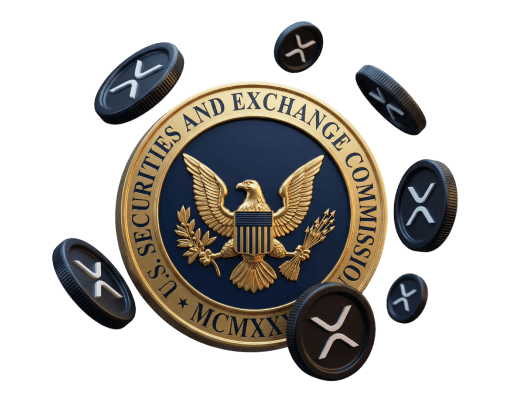
A Clash of Titans: The Lawsuit That Shook the Crypto World
This landmark conflict began in December 2020, when the U.S. Securities and Exchange Commission (SEC) launched a lawsuit against Ripple Labs and two of its senior executives. The timing was significant, occurring at the end of a bull market and after Ripple had operated openly for years. The SEC's core allegation was that Ripple had raised over $1.3 billion through an ongoing, unregistered securities offering by selling its digital asset, XRP.
According to the regulator, every sale of XRP by Ripple since 2013 was an illegal securities offering. This was not just a penalty for a past action; it was a fundamental challenge to XRP's legal classification. The lawsuit sent shockwaves through the crypto market, leading to the delisting of XRP from major U.S. exchanges and erasing billions from its market capitalization. For the industry, it signaled the start of an aggressive new phase of 'regulation by enforcement' that placed the entire sector under a legal microscope.

The Howey Test on Trial: Is XRP a Security?
At the heart of the legal battle is a judicial precedent from 1946: the Howey Test. Courts use this long-standing framework to determine if a transaction qualifies as an 'investment contract' and, therefore, a security. For a transaction to meet this definition, it must satisfy four criteria:
- An investment of money
- In a common enterprise
- With a reasonable expectation of profit
- To be derived from the efforts of others
The SEC argued that XRP sales met all four conditions. The agency claimed that investors purchased XRP expecting that Ripple Labs would use the funds to develop its ecosystem, which in turn would increase the value of XRP. From the SEC's perspective, XRP had no inherent utility and was simply a speculative vehicle tied to Ripple's success.
Ripple mounted a robust defense, arguing that XRP is not an investment contract but a technology—a bridge currency designed to facilitate faster, cheaper cross-border payments. Ripple's lawyers highlighted XRP's utility and the decentralized nature of the XRP Ledger, contending that its value was not solely dependent on the company's efforts. They also pointed out that Ripple has no ongoing contractual relationship with purchasers after a sale, a key difference from traditional securities.
A Landmark Judgment: Ripple's Partial Victory and Its Market Echoes
After years of legal maneuvering, a pivotal moment arrived in July 2023 with a summary judgment from Judge Analisa Torres. The ruling was not the absolute victory either side wanted, but its nuanced distinctions created a landmark precedent for the digital asset industry.
Institutional Sales
The court ruled that Ripple's direct sales of XRP to institutional investors and hedge funds did constitute unregistered securities offerings. In these instances, the buyers knew they were purchasing assets directly from Ripple with the expectation of profiting from the company's work, fitting the definition of an investment contract.
Programmatic Sales
In a major win for Ripple, the judge determined that 'programmatic sales' of XRP to retail buyers on public exchanges did not qualify as securities transactions. She reasoned that these were blind bid-ask transactions, where retail buyers did not know the identity of the seller. As a result, they did not have the same expectation of profiting directly from Ripple's efforts.
The market's reaction was immediate and powerful. XRP's price surged as U.S. exchanges moved to relist it, and the ruling was widely hailed as a significant challenge to the SEC's broad regulatory approach.
The Ripple Effect: Charting the Future of Crypto Regulation
The Ripple vs. SEC case has profound implications that extend far beyond XRP. It represents a critical test of how securities laws from the 1930s apply to 21st-century blockchain technology. The partial victory for Ripple has emboldened other crypto projects facing similar legal battles, providing a precedent to argue that their tokens, especially when traded on secondary markets, are not securities.
This case has also intensified the debate around 'regulation by enforcement.' Critics argue that the SEC has failed to provide clear guidelines for the industry, choosing instead to govern through costly and prolonged litigation. This approach creates regulatory uncertainty that can stifle innovation and drive businesses to other countries. The industry continues to advocate for new legislation that acknowledges the unique nature of digital assets rather than forcing them into an outdated legal framework.
While the main judgment has been delivered, the saga is not over. The legal battle over remedies and penalties for the institutional sales continues, and appeals from either side remain possible. The road ahead remains complex, but the legal lines have been drawn more clearly than ever before.
A Legacy in the Making: The Enduring Significance of the Case
The Ripple vs. SEC lawsuit will be remembered as more than just a corporate legal battle; it is a foundational chapter in the maturation of the cryptocurrency industry. It forced a direct confrontation between decentralized technology and centralized regulatory power, compelling a U.S. court to analyze the fundamental nature of a digital asset. The case exposed the limitations of existing legal frameworks and became a rallying cry for regulatory clarity.
Regardless of the final appeals or settlements, its legacy is already cemented. It has provided a crucial, albeit incomplete, legal roadmap for other digital assets and has forced regulators to confront the nuances of how these assets are sold and traded. For investors, developers, and policymakers, the case serves as a lasting reminder of the high stakes involved in defining the future of finance.
This article and any information on this site do not constitute investment advice. You should act at your own risk and, if necessary, seek professional advice before making any investment decisions.
Frequently asked questions
-
What was the SEC's core allegation against Ripple?
The SEC alleged that Ripple Labs and its top executives conducted an unregistered securities offering worth over $1.3 billion by selling XRP to investors without registering it as a security, thus violating U.S. securities laws. -
What is the Howey Test and why is it central to this case?
The Howey Test is a legal framework from a 1946 U.S. Supreme Court case used to determine if a transaction is an 'investment contract' and therefore a security. It requires an investment of money in a common enterprise with an expectation of profit from the efforts of others. The SEC's case depended on proving XRP sales met these criteria. -
Did Ripple win the case against the SEC?
It was a partial but significant victory. The court ruled that Ripple's 'programmatic sales' of XRP on public exchanges to retail investors were not securities transactions. However, it also ruled that its direct 'institutional sales' to sophisticated buyers did qualify as securities. The outcome was a split judgment, not an outright win. -
What is the key difference between 'programmatic' and 'institutional' sales in the ruling?
The court differentiated based on the buyer's knowledge. Institutional sales were direct contracts where buyers knew they were purchasing from Ripple and expected to profit from the company's efforts. Programmatic sales were blind transactions on exchanges where retail buyers did not know the seller's identity and therefore weren't investing in Ripple's enterprise in the same way. -
Why is this case so important for the wider crypto industry?
This case is pivotal because it set the first major legal precedent for classifying a digital asset sold on secondary markets and challenged the SEC's 'regulation by enforcement' strategy. The ruling gives other crypto projects a legal basis to argue against similar classifications, increasing pressure for clear legislation.
Crypto guides
Beginner-frendly
Finding a Kriptomat Alternative in 2026
 Alexey Morozov
|
Alexey Morozov
|
Phemex & MiCA: Your 2026 Guide to EU-Compliant Crypto Alternatives
 Oliver Grant
|
Oliver Grant
|
Navigating the MiCA Landscape: A Guide to Bitunix Alternatives for EU Users
 Farouk Ahmed
|
Farouk Ahmed
|
