

The Unseen Engine of DeFi: A Deep Dive into the Curve DAO Token (CRV)
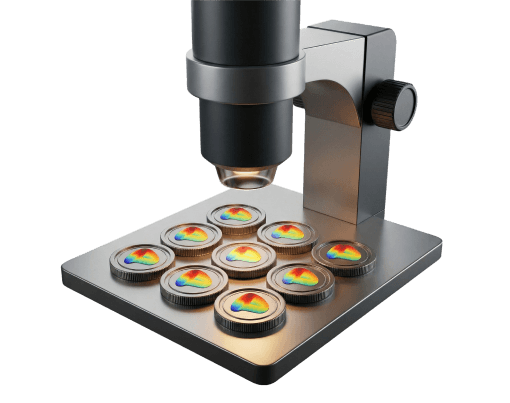
The Stablecoin Dilemma: DeFi's Original Weakness
Early decentralized finance (DeFi) faced a critical inefficiency. While automated market makers (AMMs) like Uniswap revolutionized trading, their constant product formula struggled with stablecoins. The model suited volatile assets like Ethereum but caused excessive slippage during stablecoin-to-stablecoin swaps.
Trading large volumes of USDT for USDC on early AMMs yielded unfavorable execution prices. This capital inefficiency hindered the ability of DeFi to compete with centralized finance in stable asset exchange, creating the need for a specialized liquidity solution.

Curve's Ingenious Solution: A Masterclass in Specialization
Curve.fi resolved this inefficiency by designing a custom AMM specifically for pegged assets. Unlike generic AMMs that allow prices to fluctuate easily, the Curve model concentrates liquidity heavily around the 1.0 price peg.
This specialized bonding curve facilitates massive volume trades between equivalent assets, including DAI, USDC, USDT, and wrapped Bitcoin variants, with minimal slippage and low fees. Liquidity providers deploy their capital more efficiently, generating yield without the high impermanent loss risk associated with volatile asset pools.
The Power of CRV: More Than Just a Token
The Curve DAO Token (CRV) serves three core functions within the protocol.
Governance
CRV functions as a governance token. Holders participate in the Curve Decentralized Autonomous Organization (DAO) to propose and vote on protocol upgrades, fee structures, and liquidity pool reward allocations.
Value Accrual
The protocol distributes a portion of generated trading fees to CRV holders who lock their tokens. Liquidity providers staking their LP tokens in a gauge receive CRV emissions as a reward for supplying platform liquidity.
Boosting Rewards with veCRV
The vote-escrowed mechanism drives the Curve tokenomic model. Users vote-lock their CRV for up to four years to receive vote-escrowed CRV (veCRV). Longer lock-up periods yield more veCRV. Holding veCRV increases DAO voting power and boosts liquidity provision CRV rewards by up to 2.5 times. This mechanism incentivizes long-term commitment and aligns holder interests with protocol stability.
Tokenomics and its Central Role in DeFi
The CRV economic model targets long-term sustainability. The maximum supply is capped at 3.303 billion tokens, distributed over time to liquidity providers, the core team, and a community reserve. Several key factors drive the intrinsic value of the token:
- Total Value Locked (TVL) in Curve liquidity pools serves as a primary metric of platform utility, with higher TVL generating increased trading volume and fee revenue.
- Platform trading volume directly yields fee revenue for the protocol and participating stakeholders.
- DeFi composability creates persistent demand, as protocols like Yearn Finance and Convex Finance build upon Curve to optimize yield-farming strategies.
A Foundation of Security and Trust
Curve relies on the Ethereum blockchain and has subjected its smart contracts to numerous independent audits by leading security firms. While no decentralized protocol is entirely risk-free, transparent governance and rigorous security standards establish Curve as a highly trusted platform.
Conclusion: Curve's Enduring Legacy
Curve operates as foundational decentralized finance infrastructure. By mitigating stablecoin slippage, the protocol unlocked high capital efficiency and facilitated broader ecosystem growth. The innovative veCRV mechanism established a standard for long-term governance and value alignment. Curve remains an indispensable liquidity engine driving decentralized finance.
This article provides informational content and does not constitute investment advice. Conduct thorough research or consult a qualified financial professional before making investment decisions.
Frequently asked questions
-
What is the main purpose of the CRV token?
CRV serves three primary purposes: protocol governance through the DAO, earning a share of trading fees, and boosting liquidity provider rewards via the vote-escrowed (veCRV) system. -
Why is Curve better for trading stablecoins than other DEXs?
Curve utilizes a specialized Automated Market Maker (AMM) algorithm optimized for assets priced similarly. This concentrates liquidity, enabling massive trades with minimal slippage and low fees compared to generic AMMs. -
What is veCRV and how does it work?
The veCRV ticker stands for vote-escrowed CRV, which users receive by locking CRV tokens for up to four years. Longer locks yield more veCRV, granting increased DAO voting power and boosting liquidity pool rewards by up to 2.5 times. -
Is providing liquidity on Curve risk-free?
No decentralized finance investment is entirely risk-free. While audited and secure, smart contracts carry technical risks. The impermanent loss risk is low for stablecoins, but a de-pegging event can still cause financial loss. -
What is the Curve DAO?
The Curve Decentralized Autonomous Organization (DAO) is a collective of token holders governing the protocol. Members use voting power, amplified by veCRV, to determine trading fees, reward allocations, and future upgrades.
Crypto guides
Beginner-frendly
Finding a Kriptomat Alternative in 2026
 Alexey Morozov
|
Alexey Morozov
|
Phemex & MiCA: Your 2026 Guide to EU-Compliant Crypto Alternatives
 Oliver Grant
|
Oliver Grant
|
Navigating the MiCA Landscape: A Guide to Bitunix Alternatives for EU Users
 Farouk Ahmed
|
Farouk Ahmed
|
