

How Much DOT Do You Really Need to Stake?
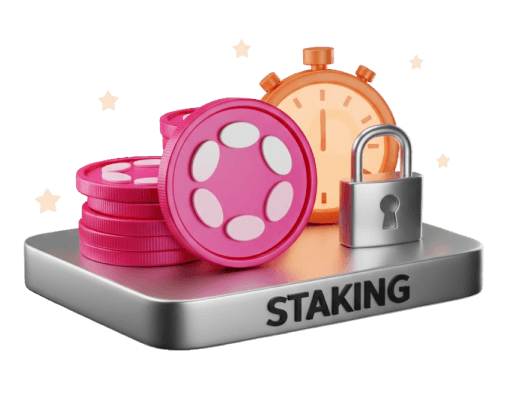
Cracking the Code: The Polkadot Staking Minimum Explained
Figuring out the minimum Polkadot (DOT) needed to earn staking rewards can be confusing. Some sources cite a high number, like 500 DOT, while others say you can start with just one. The truth is that both can be correct. Polkadot has two distinct staking methods, each with different minimum requirements. This guide will explain both options so you can choose the right path to start earning rewards.

Direct Staking vs. Pool Staking: Your Two Routes to Rewards
To understand Polkadot staking, you must know its two primary methods. Both let you earn rewards by helping secure the network, but they have different requirements.
Direct Staking (Nominating)
This is the traditional method where you directly choose, or 'nominate,' up to 16 trusted validators. It provides greater control but has a much higher and constantly changing minimum stake, making it suitable for users with a large amount of DOT.
Pool Staking (Nomination Pools)
This newer, more accessible option allows you to join a 'pool' with other DOT holders. The pool's operator uses the collective stake to nominate validators. This method was created to lower the entry barrier, making it perfect for most participants.
Pool Staking: Your Easiest Path to Earning DOT
For most users, nomination pools are the ideal way to stake Polkadot. They were created to address the rising minimum for direct staking, allowing more people to participate in network security and earn rewards.
The primary advantage is the low entry requirement. You can join a nomination pool with as little as 1 DOT, making it the most practical method for beginners or those with smaller balances. By contributing your DOT to a pool, you delegate the task of selecting validators to the pool operator. Your rewards are proportional to your share of the pool's total stake. This system simplifies the process, and you can begin on the official Polkadot Staking Dashboard.
Understanding Direct Staking: The 'Minimum Active Nomination'
The high figures often mentioned, such as 500 or 600 DOT, refer to the 'minimum active nomination' for direct staking. This is not a fixed number but a dynamic threshold set by network activity. The Polkadot network pays rewards to a limited number of nominators for each validator. To be included in this rewarded group, your stake must exceed the smallest stake among all rewarded nominators on the network. This minimum can change daily.
This system ensures network efficiency by preventing it from being overwhelmed by countless small nominations. While direct staking provides more control, its high and fluctuating minimum makes it impractical for most holders. Pool staking is the better choice unless you have a large amount of DOT and want to manage your validator selections directly.
Key Staking Terms You Need to Know
Before you begin staking, it is important to understand two key concepts that affect your funds.
The Unbonding Period
When you decide to unstake your DOT, the funds are not available immediately. They enter a 28-day 'unbonding' period, during which your DOT is locked and does not earn rewards. This cooldown is a security feature of the Polkadot network.
The Existential Deposit
Every Polkadot account must hold a minimum balance of 1 DOT to remain active. This is called the existential deposit. If an account's balance falls below this amount, it is deactivated, and the remaining funds are lost. Always ensure your balance stays above 1 DOT after transaction fees.
Conclusion: Start Small, Stake Smart
The minimum amount of DOT needed for staking depends on the method you choose. Direct staking requires a large and variable amount, while nomination pools make staking accessible to everyone. For most users, joining a nomination pool with as little as 1 DOT is the simplest and most efficient way to earn rewards. With this information, you can confidently begin your Polkadot staking journey.
This article is for informational purposes only and does not constitute investment advice. Always conduct your own research and consider consulting a professional financial advisor before making investment decisions. You are solely responsible for your actions.
Frequently asked questions
-
Why is the direct staking minimum so high and variable?
The direct staking minimum is dynamic because it is determined by the lowest stake among all nominators currently earning rewards. To qualify for rewards, your stake must exceed this amount. This threshold changes based on network participation, which helps maintain network efficiency. -
What is the absolute minimum DOT I need to join a nomination pool?
The minimum required to join a nomination pool is 1 DOT. This low threshold was intentionally set to make staking accessible to everyone. -
Can I lose my DOT when staking?
Yes, there is a risk called 'slashing.' If a validator you support (either directly or through a pool) acts maliciously or is offline for too long, a portion of their staked DOT, including yours, can be forfeited as a penalty. While slashing is rare, choosing reputable validators or well-managed pools is crucial to minimize this risk. -
What's the difference between the unbonding period and the existential deposit?
They are unrelated concepts. The unbonding period is a 28-day waiting period after you unstake your DOT before the funds become transferable. The existential deposit is the minimum balance of 1 DOT required to keep a Polkadot account active. -
Where can I check the current minimum for direct staking?
The current dynamic minimum for direct staking, often called the 'minimum active bond,' is displayed on the official Polkadot Staking Dashboard. You can typically find it within the 'Nominate' section or on pages showing network staking statistics.
Crypto guides
Beginner-frendly
Phemex & MiCA: Your 2026 Guide to EU-Compliant Crypto Alternatives
 Oliver Grant
|
Oliver Grant
|
Navigating the MiCA Landscape: A Guide to Bitunix Alternatives for EU Users
 Farouk Ahmed
|
Farouk Ahmed
|
A Guide to Toobit Alternatives for EU Users in 2026
 Alexey Morozov
|
Alexey Morozov
|
