

Becoming a Filecoin Storage Provider: The Definitive Blueprint
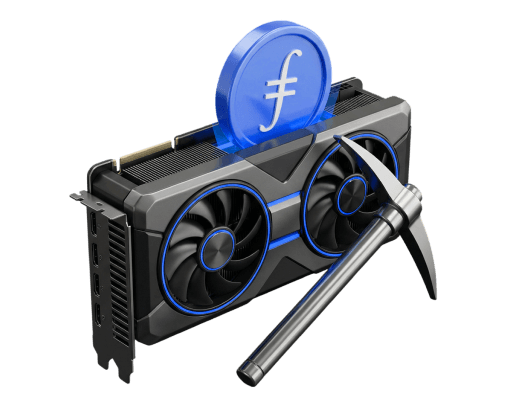
Analysing the Business Case for Mining Filecoin
Approaching Filecoin mining as a serious business venture is crucial before purchasing any hardware. Unlike speculative cryptocurrency mining, becoming a Filecoin Storage Provider (SP) is a service-oriented role with substantial upfront and ongoing costs. Prospective miners must conduct a thorough economic analysis of the key financial considerations.
A significant capital expenditure is required for hardware, as high-performance servers with specific CPU, GPU, and RAM configurations are strictly necessary. Another critical aspect is the FIL collateral. Storage providers must pledge FIL tokens to guarantee service commitments, meaning a substantial amount of cryptocurrency must be acquired before earning block rewards. This ties up capital and introduces exposure to market volatility. Furthermore, consistent operational expenses include electricity for enterprise-grade hardware, high-bandwidth internet, and potential data centre co-location fees. Finally, the network enforces reliability through penalties known as slashing. If a provider fails to prove they are storing data correctly or goes offline, a portion of their collateral is forfeited, representing a tangible financial risk.

The Core Architecture of the Filecoin Ecosystem
To operate effectively, a miner must understand the foundational principles of the Filecoin network, an intricate ecosystem designed to create a robust, decentralised marketplace for data storage and retrieval.
There are two primary miner roles within this decentralised cloud storage network. Storage providers are the backbone of the ecosystem, responsible for storing client data. They earn FIL tokens by dedicating storage capacity and reliably proving they maintain the data over time. The second role comprises retrieval miners, a developing market of specialists who provide fast, low-latency access to data stored on the network, earning fees for their bandwidth and service.
The integrity of the network is maintained by two novel cryptographic consensus mechanisms. Proof-of-Replication (PoRep) requires a storage provider to perform an intensive computational process called sealing when accepting data. This generates a unique cryptographic proof, submitted to the blockchain, demonstrating the creation of a physically distinct copy of that data. Proof-of-Spacetime (PoSt) ensures data persistence. After data is sealed, the network continuously challenges providers at random intervals to prove they are still storing the data, ensuring availability over the agreed contract duration.
Essential Hardware and Software Requirements
The hardware required for Filecoin mining is enterprise-grade and tailored to the computational demands of the network. Each component plays a vital role in the complex sealing process. A modern, multi-core CPU is essential, with support for SHA Extensions being a strict requirement to accelerate cryptographic hashing. A massive capacity of high-speed RAM is also critical. While older setups used less, a minimum of 256 GB is now heavily recommended to avoid severe performance bottlenecks during sector sealing. Generating the complex cryptographic proofs requires a powerful workstation or data centre graphics card with at least 11 GB of VRAM. A multi-tiered storage setup is optimal, utilising high-endurance NVMe SSDs for caching during the sealing phase and large-capacity HDDs for cost-effective, long-term storage.
On the software side, the primary tool is an implementation of the Filecoin protocol. The most widely used is Lotus, a feature-rich node client that manages all interactions with the blockchain, from synchronisation to sealing sectors and submitting proofs.
The Operational Journey of a Storage Provider
Once the business case is validated and hardware is procured, the operational phase begins. This methodical process starts with building the server and installing a Linux-based operating system, followed by compiling and configuring the Lotus software. Before participating, the Lotus node must download and verify the entire Filecoin blockchain, a highly intensive process requiring a fast, stable internet connection. Next, the operator must acquire FIL tokens for the initial pledge collateral, typically by purchasing them on a cryptocurrency exchange and transferring them to the wallet managed by Lotus. With the infrastructure in place, the core mining loop of sealing and proving begins. This involves accepting storage deals or generating committed capacity sectors, sealing the data, and submitting the proof to the network. The node is then continuously challenged to prove it is storing the data, earning FIL block rewards for successful compliance.
Securing and Managing Your Mined Rewards
As a storage provider earns block rewards, safeguarding the accumulated FIL becomes paramount. The wallet generated by a Lotus node is considered a hot wallet and should not serve as the final destination for significant funds. Best practices dictate moving earned cryptocurrency to secure storage solutions. Options include hardware wallets, which offer cold storage by keeping private keys completely offline. For smaller or more accessible amounts, reputable desktop software wallets are suitable. Serious enterprise operations often utilise multi-signature solutions, such as Glif Safe, which provide a higher level of security by requiring transaction approval from multiple authorised parties.
A Lighter Entry Point: Exploring Filecoin Station
For those intrigued by the decentralised web but not ready for the massive commitment of becoming a full storage provider, there is an accessible alternative. Filecoin Station is a desktop application that allows individuals to contribute idle computing resources to the network. While it bypasses the extreme complexities of sealing data or pledging collateral, it enables users to assist with decentralised tasks like data retrieval and compute jobs. This lightweight participation helps power the network and allows contributors to earn small amounts of FIL, serving as a low-risk introduction to the Web3 storage ecosystem.
Conclusion: The Miner's Role in a Decentralised Future
Becoming a Filecoin storage provider is a formidable challenge that transcends traditional cryptocurrency mining. It demands a blend of technical expertise, business acumen, and a long-term vision. The path requires significant capital investment in enterprise hardware and token collateral, alongside rigorous operational discipline to avoid financial penalties. However, for those who successfully navigate this journey, the reward extends beyond FIL tokens. It provides the opportunity to become a foundational participant in building a resilient, efficient, and decentralised internet architecture, transforming the theoretical concept of Web3 into a tangible reality.
Please be advised that this article and any information provided do not constitute financial or investment advice. Participating in cryptocurrency networks involves substantial risk. You should conduct independent research and seek professional guidance before making any investment decisions.
Frequently asked questions
-
What is the main difference between mining Bitcoin and mining Filecoin?
Bitcoin mining relies on Proof-of-Work, a computational race to solve arbitrary mathematical puzzles to secure the network. Filecoin mining is utility-driven; providers supply verifiable decentralised data storage, and their rewards are strictly tied to proving that usable storage capacity rather than expending raw computational power. -
Can I mine Filecoin with a standard home computer?
No, it is highly impractical. Filecoin mining requires enterprise-grade hardware, including a modern multi-core CPU with SHA Extensions, at least 256 GB of RAM, a high-end dedicated GPU, and extremely fast NVMe enterprise storage. A standard consumer desktop cannot meet these rigorous cryptographic demands. -
What is slashing and why is it a significant risk?
Slashing is an automated financial penalty enforced by the network. If a storage provider fails to submit required cryptographic proofs on time, often due to hardware failures or internet outages, the network permanently confiscates a portion of their pledged FIL collateral to ensure strict reliability. -
Do I need to buy FIL tokens before I can start earning them?
Yes. To activate a node as a storage provider, you must first pledge FIL tokens as collateral to guarantee your long-term storage commitments. This requires purchasing or otherwise acquiring FIL before the mining operation can begin generating block rewards. -
Is it possible to contribute to the network without becoming a full storage provider?
Yes. For individuals looking for a lighter entry point, Filecoin Station is a desktop application that utilises idle computing resources for network tasks like data retrieval. It requires no upfront collateral and provides a simple, low-stakes way to participate and earn small token rewards.
Crypto guides
Beginner-frendly
Finding a Kriptomat Alternative in 2026
 Alexey Morozov
|
Alexey Morozov
|
Phemex & MiCA: Your 2026 Guide to EU-Compliant Crypto Alternatives
 Oliver Grant
|
Oliver Grant
|
Navigating the MiCA Landscape: A Guide to Bitunix Alternatives for EU Users
 Farouk Ahmed
|
Farouk Ahmed
|
