

Beyond Mining: The Future of Data Stewardship
The New Stewards of the Digital Realm
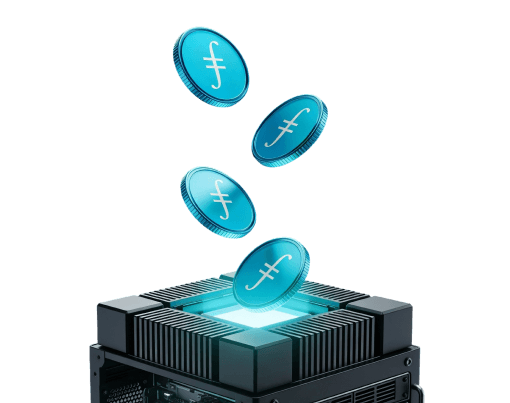
Blockchain mining discussions often center on energy-intensive computations like those used by Bitcoin. The Filecoin network offers a distinctly different approach. A Filecoin Storage Provider operates not as a traditional miner, but as a data steward for the decentralized web. Instead of executing abstract calculations, providers contribute tangible value by supplying secure, verifiable, and decentralized storage capacity.
A provider's core function involves accepting data from clients, storing it in designated sectors, and generating cryptographic proofs to verify that the information remains intact and accessible. This process transforms the blockchain from a simple ledger into a globally distributed hard drive integrated with the InterPlanetary File System (IPFS). Ultimately, this architecture lays the groundwork for a Web3 ecosystem free from central points of failure.

The Economics of Trust and Reliability
The Filecoin network relies on an economic model designed to reward reliability. Storage Providers generate revenue through two primary channels. First, they earn block rewards in the form of Filecoin (FIL) tokens by proposing new blocks, contributing storage capacity, and maintaining network consensus. A provider's influence and earning potential scale directly with their Storage Power, which measures the total useful storage they offer the network.
The second revenue channel comes from storage and retrieval deals. Providers compete in an open decentralized marketplace, establishing agreements with clients to store data for a specific duration and fee. This dynamic creates a service-based economy where clients directly compensate providers for reliability and performance, moving the ecosystem beyond mere cryptocurrency speculation into a functional model built on digital trust.
The Blueprint for Participation
Becoming a Storage Provider requires a significant operational commitment and a robust technical foundation. Participants must invest in specific enterprise-grade infrastructure to meet the demands of the network. Key hardware requirements include:
- High-performance processors and substantial RAM for cryptographic computations.
- Fast NVMe solid-state drives (SSDs) to manage the intensive data sealing process.
- High-capacity enterprise hard disk drives (HDDs) to store the long-term data sectors.
- A stable, unmetered, high-bandwidth internet connection to reliably serve clients and interact with the blockchain.
Beyond physical hardware, providers must commit to strict data availability and integrity standards. A provider must safeguard client data for a sector's entire lifecycle, which frequently exceeds a year. Consistent uptime and proactive system administration remain paramount to long-term success in the Filecoin ecosystem.
Building a Resilient Decentralized Web
Joining the network as a Storage Provider represents an investment in a more equitable and resilient digital future. The Filecoin ecosystem currently hosts a wealth of culturally and scientifically significant information, ranging from historical archives to massive public research datasets. By supplying decentralized storage, providers actively help preserve human knowledge.
Furthermore, initiatives like Filecoin Green align this data economy with environmental sustainability by encouraging providers to adopt and verify renewable energy sources. The broader ecosystem benefits from a vibrant global community of developers, providers, and Web3 enthusiasts dedicated to building a robust, open internet. Operating a storage node offers a unique opportunity to transition from a passive web user into a foundational architect of the decentralized web.
Please note that this article and any information provided on this site do not constitute financial or investment advice. You should act at your own discretion and seek independent professional counsel before making any investment decisions.
Frequently asked questions
-
Is being a Filecoin Storage Provider the same as Bitcoin mining?
No. While both secure a blockchain network, Bitcoin mining relies on energy-intensive computational power for Proof-of-Work puzzles. In contrast, Filecoin Storage Providers deliver a tangible utility by supplying verifiable data storage. They use Proof-of-Replication and Proof-of-Spacetime consensus mechanisms to continuously verify that they are securely storing real client data. -
What are the main ways I can earn revenue as a Storage Provider?
Providers access two primary income streams. First, they earn block rewards in FIL tokens for contributing storage power and securing the network. Second, they generate revenue by negotiating storage and retrieval deals directly with clients in an open decentralized marketplace. -
Do I need to be a large data center to participate?
No. While large data centers are well-suited for the network, dedicated individuals and smaller IT businesses can successfully operate as Storage Providers. The primary requirement is securing the correct enterprise-grade hardware, reliable high-speed connectivity, and the technical expertise necessary to maintain strict operational reliability. -
What kind of data is stored on the Filecoin network?
The network accommodates a vast range of information, including enterprise backups, decentralized application data, and valuable public datasets. Common storage use cases include scientific research, historical archives, NFT metadata, and creative media, all of which benefit from a permanent and highly accessible storage architecture. -
What happens if my storage system goes offline?
Maintaining consistent uptime is critical. If a provider's system goes offline, they will fail to submit their required daily cryptographic proofs. This failure results in a financial penalty known as slashing, where a portion of the provider's pledged collateral is forfeited. This mechanism ensures the high reliability necessary to securely host client data.
Crypto guides
Beginner-frendly
Finding a Kriptomat Alternative in 2026
 Alexey Morozov
|
Alexey Morozov
|
Phemex & MiCA: Your 2026 Guide to EU-Compliant Crypto Alternatives
 Oliver Grant
|
Oliver Grant
|
Navigating the MiCA Landscape: A Guide to Bitunix Alternatives for EU Users
 Farouk Ahmed
|
Farouk Ahmed
|
