

Bridging USDT: The Complete BEP20 to ERC20 Handbook
Why Bridge USDT Between Blockchains?
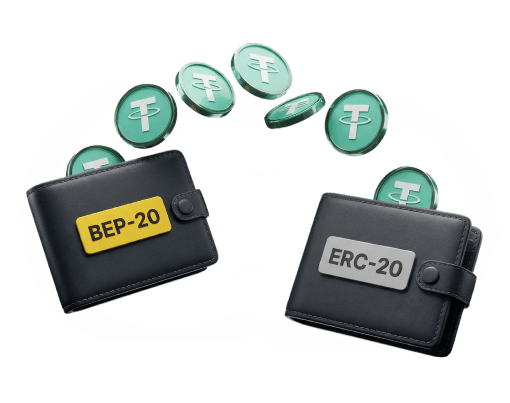
In decentralized finance (DeFi), different blockchains serve distinct purposes. Users often hold USDT on the BNB Smart Chain (BSC) to take advantage of fast transactions and low fees, making it ideal for frequent trading. However, the Ethereum network hosts a larger, more established ecosystem of decentralized applications (dApps), liquidity pools, and investment opportunities. Bridging assets becomes necessary to move funds from the cost-effective BSC environment and access Ethereum's broader market.
Think of this process like moving funds from an efficient local bank to a major international financial hub. The local bank handles daily needs affordably, while the international center offers access to exclusive global financial products. Bridging BEP20 USDT to its ERC20 equivalent provides a secure pathway for capital to move between these two distinct but interconnected digital economies.

Selecting a Secure and Efficient Cross-Chain Bridge
The cross-chain bridge you select acts as a custodian during the transfer, making it a critical decision. A poor choice can result in lost funds or excessive fees. Evaluate options based on several key factors.
Security and Reputation
Assess the security credentials of the bridge. Check for public reports from independent security audits. Prioritize established platforms with a proven history of successful transactions and active communities. Avoid new, unaudited platforms offering unrealistic deals.
Liquidity
A bridge requires sufficient cross-chain liquidity—assets available on both chains—to process swaps efficiently. Low liquidity causes failed transactions or high slippage, where the final execution price deviates from the quoted price. Always verify that the platform can handle the intended transfer volume.
Cost and Speed
Analyze the fee structure carefully. Costs typically include a service fee plus network gas fees for both blockchains. Ethereum gas fees are often significantly higher than BSC fees. Some bridges offer fixed-rate quotes, while others use floating rates that fluctuate during the transaction. Additionally, check estimated transaction speeds, which range from nearly instant to several hours depending on network congestion and the underlying bridging mechanism.
Step-by-Step Guide to Bridging USDT
While platform interfaces vary, the core steps for transferring assets remain consistent across most services. Follow this general process to bridge USDT safely.
- Select a Reputable Bridge: Choose a trusted service or decentralized exchange (DEX) with cross-chain functionality.
- Connect Your Wallet: Link a Web3 wallet, such as MetaMask or Trust Wallet, to the platform and set the source network to BNB Smart Chain.
- Input Transfer Details: Specify the source chain (BNB Smart Chain), destination chain (Ethereum), asset (USDT), and transfer amount.
- Review Transaction and Fees: Check the summary displaying the expected ERC20 USDT output, exchange rate, service fee, and estimated network gas fees.
- Approve the Token: Grant the smart contract permission to access the BEP20 USDT. This token approval transaction requires a small gas fee on the BNB Smart Chain.
- Confirm the Bridge Transaction: Execute the main transfer to initiate the cross-chain process.
- Wait and Verify: Wait for the protocol to process the transfer, then switch the wallet network to Ethereum to view the updated ERC20 USDT balance.
Best Practices for a Secure Transfer
Security remains the highest priority in every DeFi transaction. Adhering to strict safety protocols significantly reduces risk exposure.
Always access platforms through official, bookmarked URLs to avoid phishing websites designed to steal credentials. Meticulously verify all destination addresses, as blockchain transactions are irreversible. Understanding token approvals is also vital. Granting a smart contract permission to spend tokens gives it control over those specific assets. Interact only with audited, reputable contracts, and revoke permissions after use to enhance security.
When using a new service or moving a large sum, send a small test transaction first. The minor network fee provides valuable peace of mind. Finally, never share private keys or seed phrases, as legitimate applications will never request this information.
Executing Cross-Chain Transfers Confidently
Bridging USDT from BEP20 to ERC20 unlocks deeper liquidity and broader opportunities across the decentralized web. A strategic approach that prioritizes careful research over speed ensures a safe transfer. By evaluating platforms for security, liquidity, and cost-effectiveness, and by adhering to rigorous safety practices, users can navigate the cross-chain ecosystem securely and efficiently.
This article is for informational purposes only and does not constitute investment advice. Act at your own discretion and consult a professional advisor before making any financial decisions.
Frequently asked questions
-
What are the main risks when bridging tokens?
Primary risks include smart contract vulnerabilities that hackers can exploit, low liquidity causing failed transactions or high slippage, and user errors like sending funds to an incorrect address or network. -
How long does a BEP20 to ERC20 bridge typically take?
Transfer times range from a few minutes to over an hour, depending on the underlying technology of the bridge and current congestion levels on both the BNB Smart Chain and Ethereum networks. -
Why are the fees for bridging to Ethereum so high?
Costs are largely driven by Ethereum network gas fees required for computational effort. High demand and limited block space on Ethereum result in significantly higher transaction costs compared to the BNB Smart Chain. -
Can I send BEP20 USDT directly to an ERC20 address without a bridge?
No. Sending BEP20 tokens directly to an Ethereum address without using a specialized cross-chain bridge results in a permanent loss of funds because the two networks are not directly compatible. -
What is the difference between wrapped and native USDT after bridging?
When bridging, the protocol typically locks the BEP20 USDT and issues an equivalent wrapped version on Ethereum pegged to the original value. This ERC20 version functions exactly like native USDT and is widely accepted across the Ethereum ecosystem.
Crypto guides
Beginner-frendly
Finding a Kriptomat Alternative in 2026
 Alexey Morozov
|
Alexey Morozov
|
Phemex & MiCA: Your 2026 Guide to EU-Compliant Crypto Alternatives
 Oliver Grant
|
Oliver Grant
|
Navigating the MiCA Landscape: A Guide to Bitunix Alternatives for EU Users
 Farouk Ahmed
|
Farouk Ahmed
|
