

Which Crypto to Buy Today
for Long Term in 2024?
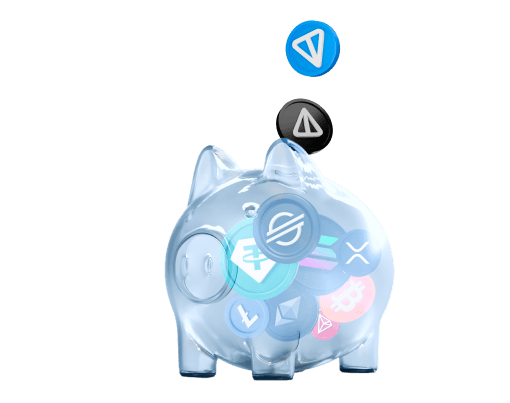
The cryptocurrency market continues to mature, attracting institutional capital and driving the expansion of decentralized finance (DeFi). Building a successful long-term strategy for 2024 requires understanding market mechanics, distinguishing between short-term trading and long-term holding, and identifying digital assets with robust fundamentals.
Short-Term vs. Long-Term Crypto Investments: Key Types
Market participants approach digital assets through various tactics, from rapid intraday trades to multi-year holding strategies. Recognizing these mechanics helps in building a balanced crypto portfolio.
Long-Term Investing
Often referred to as buying and holding, this strategy involves securing digital assets for over a year. Investors focus on established blockchain projects demonstrating consistent historical growth and fundamental utility to build wealth over time.
Short-Term Investing
Short-term investments target assets expected to appreciate within weeks or months. Success relies on analyzing a project's immediate market catalysts, technical upgrades, and solutions to prevailing industry challenges.
Trading
Active trading generates returns through frequent buying and selling to capitalize on minor price fluctuations. This high-risk approach demands advanced technical analysis, market timing skills, and significant screen time.
Mining
Mining utilizes specialized hardware to validate blockchain transactions and secure Proof-of-Work networks. Participants earn cryptocurrency rewards in exchange for computing power. Profitability depends heavily on local electricity costs, network difficulty, and equipment depreciation.

Essential Crypto Investing Tips
Cryptocurrency prices experience severe volatility, creating distinct challenges for market entrants. Implementing strict risk management frameworks improves decision-making and protects capital.
Invest Only Disposable Income
Never allocate capital needed for essential living expenses. Deploying only disposable income allows investors to weather sharp market downturns without risking personal financial stability.
Diversify Your Portfolio
Spreading capital across various sectors like decentralized finance platforms, Layer-1 blockchains, and infrastructure protocols reduces overall risk. A well-diversified portfolio ensures that significant losses in a single digital asset do not devastate total holdings.
Conduct Fundamental Research
Market hype rarely guarantees sustained returns. Evaluate a cryptocurrency by examining its whitepaper, tokenomics, active developer community, and real-world utility. Transparent leadership and clear roadmaps strongly indicate project viability.
Automate With Trading Bots
Algorithmic trading bots help capture short-term price movements by executing trades according to strict, pre-configured parameters. While bots react to market shifts instantly, they require constant monitoring and strategy adjustments to remain effective.
How to Buy Crypto for a Long-Term Portfolio
Building a digital asset portfolio begins with market cycle analysis and entry timing. Establish a rigid risk management protocol early, utilizing stop-loss orders and defined position sizing to protect initial capital.
Select a reputable cryptocurrency exchange offering deep liquidity, robust security protocols, and standard fiat on-ramps like bank transfers. Avoid concentrating funds into a single token. Instead, choose a diverse array of assets spanning different blockchain sectors.
Purchasing crypto involves creating an exchange account, passing mandatory identity verification, and selecting a trading pair. Once the transaction clears, immediately transfer the digital assets to a personal, non-custodial wallet for long-term safekeeping.
While high market volatility poses risks, it frequently presents strategic buying opportunities. Rely on consistent fundamental analysis to track network growth and macroeconomic trends, adjusting allocations strictly according to personal risk tolerance.
Top Cryptocurrencies for Long-Term Investment in 2024
Cryptocurrency valuations rely heavily on supply dynamics and network demand. While emerging altcoins occasionally offer rapid appreciation, they carry exponentially higher risks compared to established networks. The following digital assets feature strong fundamentals relevant to a 2024 investment horizon.
Notcoin (NOT)
Notcoin emerged in early 2024 as a viral application integrated directly into Telegram. Its accessible mechanics rapidly onboarded millions of Web3 users, establishing a massive community foundation prior to its token generation event.
Toncoin (TON)
Initially conceptualized by the Telegram team, Toncoin benefits from direct integration with the popular messaging application. This architecture exposes decentralized applications, native payment networks, and file storage solutions to hundreds of millions of active users.
Bitcoin (BTC)
As the original decentralized currency, Bitcoin acts as the primary store of value and macro trendsetter for the broader digital asset market. Its hard-capped supply of 21 million coins and rising institutional adoption through spot ETFs solidify its role as a portfolio cornerstone.
Tether (USDT)
Tether operates as the global standard for stablecoins, maintaining a strict peg to the U.S. dollar. While it does not generate capital appreciation, allocating a portion of a portfolio to USDT provides vital liquidity and stability during sharp market downturns.
Stellar (XLM)
Stellar focuses on facilitating high-speed, low-cost cross-border currency transfers. Recent mainnet upgrades introduced advanced smart contract capabilities, expanding the network's capacity to host decentralized applications and complex financial instruments.
Ethereum (ETH)
Ethereum pioneered smart contract functionality, serving as the foundational infrastructure for decentralized finance and digital collectibles. Its transition to Proof-of-Stake and continuous Layer-2 scaling developments secure its position as the leading programmable blockchain.
Solana (SOL)
Solana provides a high-performance alternative to Ethereum, characterized by exceptional transaction speeds and fractional network fees. A thriving developer ecosystem and rapid deployment of decentralized applications continue to attract institutional capital.
Litecoin (LTC)
Launched in 2011 as a lighter modification of Bitcoin's code, Litecoin processes transactions faster and cheaper. Despite intense competition from newer protocols, its flawless historical uptime and widespread merchant acceptance maintain its long-term viability.
TRON (TRX)
TRON operates a decentralized blockchain geared toward content sharing and global entertainment. The network enables creators to monetize content directly, eliminating intermediary platform fees, and currently processes a massive share of global stablecoin transfer volume.
Ripple (XRP)
XRP powers a distinct consensus ledger optimized for institutional cross-border settlements. Its design allows international financial institutions to bypass the delays of the traditional correspondent banking system, settling cross-currency transactions in seconds.
How to Store Your Long-Term Crypto Investments
Selecting the correct digital wallet is crucial for asset security. Long-term holders prioritize cold storage solutions, while active traders often retain working capital on reputable cryptocurrency exchanges for immediate liquidity.
Hardware wallets represent the gold standard for cold storage. These physical devices keep private keys entirely offline, rendering them virtually immune to remote cyberattacks. Liquidating assets stored on a hardware wallet requires physically connecting the device to an internet-enabled computer to authorize outward transfers.
Software wallets function as non-custodial hot storage on desktop computers, browsers, or mobile devices. They strike a balance between security and convenience, giving users complete control over their private keys without relying on a centralized exchange platform.
Final Thoughts on Crypto Investing
Successfully navigating the digital asset space demands rigorous market comprehension. Although blockchain technology increasingly intersects with traditional finance, global mainstream adoption remains in a transitional phase, positioning cryptocurrencies primarily as speculative investment vehicles.
While extreme market volatility unlocks pathways to significant financial returns, long-term profitability requires a calculated approach. Strict risk management, unyielding technical research, and emotional discipline remain mandatory for surviving crypto market cycles.
Frequently asked questions
-
What are the best cryptocurrencies for long-term investment?
Bitcoin and Ethereum dominate long-term portfolios due to their massive market capitalizations, institutional adoption, and foundational ecosystem roles. Always align asset selection with personal risk tolerance and conduct fundamental research before allocating capital. -
How should I research a cryptocurrency project?
Begin by scrutinizing the official whitepaper to verify the network's technological utility. Analyze tokenomics, evaluate the development team's track record, and check on-chain metrics to confirm active network usage and community growth. -
What are the primary risks of digital asset investing?
The most prominent risks involve extreme price volatility, unpredictable global regulatory shifts, and technical vulnerabilities like smart contract exploits or exchange insolvencies. -
Which investment strategies work best for cryptocurrencies?
Dollar-Cost Averaging (DCA) is widely used to mitigate volatility by purchasing fixed amounts of an asset at regular intervals. Long-term holding minimizes the impact of short-term price swings, while sector diversification reduces overall portfolio risk. -
How often should I review my cryptocurrency portfolio?
Assess your portfolio quarterly or after major macroeconomic events. Periodic reviews help secure profits from overperforming assets, rebalance target allocations, and adjust strategies based on technological upgrades or regulatory news.
Crypto guides
Beginner-frendly
How to Take Profits from Crypto Without Selling: Generating Passive Income
 Darina Perepelitza
|
Darina Perepelitza
|
Crypto Hardware Wallets: Fortifying Your Crypto Holdings with Confidence
 Roman Klochko
|
Roman Klochko
|
Hot Crypto Wallets: Meaning and Significance for Digital Economy
Roman Klochko
|

Our website uses cookies. Our Cookie Policy